The Force Of ARC-ES Is Strong In The States
May 1, 2026
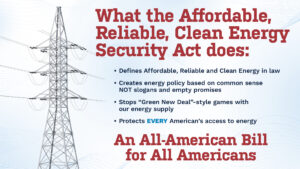
Happy Star Wars Day to those who celebrate! At TEA, we’re often telling you about the hard work to establish a federal Affordable, Reliable and Clean Energy Security (ARC-ES) policy for our nation, but many states have already taken the first steps to establish laws in their own backyards.
Much like in the movies where a rag tag band of rebels come together to save the galaxy, more and more state leaders are coming together to ensure that American families and businesses have access to affordable, reliable and clean energy. These states understand the need for common-sense energy policies that work and embracing the force that is ARC-ES.

Louisiana: Last summer, Louisiana delivered one of the strongest examples and greatest victories for ARC-ES legislation in the states when they became the first in the nation to codify into law a guarantee of affordable, reliable and clean energy for homes and businesses statewide, positioning the state as a powerhouse of economic growth and innovation.
Among other benefits, the bill strengthened Louisiana’s economic momentum and global competitiveness by attracting continued investment from leading corporations and prioritized domestically produced fuel sources to reduce dependence on foreign nations.
Ohio: ARC-ES legislation in Ohio is working its way through the legislature as we speak. Senate Bill 294 was introduced in the state senate last fall and includes all the criteria needed to establish affordable, reliable and clean energy standards for the state.
In 2023, Ohio put in place a “natural gas is green” policy that codified the environmental benefits of using natural gas. As we at TEA have been telling you for years, natural gas is the number one reason the U.S. has been a world leader in reducing emissions—even if the green-at-any-cost crowd wants you to believe otherwise.
Tennessee: In April 2025, Tennessee enacted a law much like earlier Ohio legislation that declared natural gas a clean energy source. This was a major victory for every Tennessean, every business, every family and everyone struggling to pay their monthly energy bills.
Indiana: Indiana Sen. Jim Buck, R-Kokomo, should be commended for Senate Bill 178 that redefined natural gas as “green energy” in his state. The bill was enacted into law last spring. Classifying natural gas as clean energy would open energy projects that use this energy source to potential additional federal and state funding.
But, more importantly, it opens the door to abundant and affordable energy that will lower monthly bills for consumers. Sen. Buck said he fashioned his bill after the Ohio law that similarly defined natural gas as clean energy, as well as model legislation put forth by the American Legislative Exchange Council (ALEC).
Oklahoma: In December, State Sen. Michael Bergstrom proposed legislation built around ARC-ES. S.B. 1300 would direct the Oklahoma Corporation Commission to prioritize affordable, reliable, clean energy security, along with other common-sense provisions like calling for sufficient dispatchable clean energy to meet residential and commercial demand. Natural gas currently provides roughly half of Oklahoma’s electricity and remains one of the state’s most dependable large-scale power sources.
West Virginia: A bill titled the West Virginia First Energy Act was introduced in their state legislature in January. The bill is still working its way through the legislative process, but embraces the ARC-ES spirit which is a no-brainer for the state. As testimony from the Heartland Impact put it, “With its commonsense support of local affordable and reliable energy sources, SB 420—the West Virginia Energy First Act—is crucial to the Mountain State’s ability to effectively meet rapid and imminent surging growth in electricity demand.”
Michigan: Michigan is currently considering legislation introduced in March, House Bills 5710 and 5711, that like ARC-ES would require the consideration of all energy sources in long-term planning in the state. In testifying in support of the legislation the Heartland Impact Executive Director said, “Michigan energy policy should be judged by whether it provides affordable, reliable, secure, dispatchable, and environmentally responsible electricity at total system cost. A decarbonization mandate does not become affordable merely because wind and solar have no fuel cost, and a resource does not become clean simply because emissions are shifted from the point of generation to mining, manufacturing, forced-labor-risk supply chains, land use, transmission corridors, recycling, and waste management.”
Idaho: In March, the Idaho legislature voted in support of state energy sovereignty through House Concurrent Resolution 32. Idaho’s long-term reliability and grid stability require secure, dispatchable base load generation capable of continuous output of weather variability, including advanced and conventional nuclear energy technologies, hydroelectric plants and natural gas generation.
New Hampshire: Earlier this year New Hampshire considered HB 1455, which would have established a clear state policy prioritizing affordable, reliable and clean energy as interdependent pillars of sound energy governance. The bill appears to have stalled procedurally, but this was a good first step toward the state establishing ARC-ES principles in its energy policy.
Mississippi: At the beginning of 2025, Mississippi considered Senate Bill 2231 which would have defined “clean energy” sources permissible in the state to include natural gas and nuclear energy, among others. The bill unfortunately did not advance into law, but such policies will hopefully be revisited by the state’s legislature in the future.
Federal ARC-ES will only make us stronger
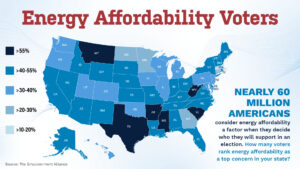
Nearly 60 million Americans from every single state in the nation say they consider energy affordability an important issue. These citizens may not know all the nuances of the how the electrical grid works. But, they do know that energy is a factor in almost every aspect of our daily lives and that’s why keeping it affordable, reliable and clean is so important. At TEA, we hope to soon see the force of ARC-ES take hold in Washington as well in the form of a federal ARC-ES policy that will make it even easier for state leaders to establish affordable, reliable and clean energy policies for all of America.