America’s Costly New Summer Tradition
Summer is full of traditions for American families — barbeques, vacations, beach days. But one tradition that almost no one looks forward to is the summer hike in their electricity bills just as heat waves and air conditioning season kicks in. As we have begun to see every summer now, there have been reports across the country of electricity rates being hiked for U.S. consumers.
- Colorado: “Xcel Energy’s proposed deal to raise average residential energy bills by nearly 6%
is running into a wall of opposition from Colorado consumer and environmental groups. The
proposed residential rate increase would be among the largest ever in the state, according
to the Colorado Office of the Utility Consumer Advocate (UCA)…” - Wyoming: “Rocky Mountain Power, Wyoming’s largest regulated electric utility, filed a
request to the Wyoming Public Service Commission in May for a $71 million rate hike, which
averages to an 8.8% increase among its 150,000 customers in the state, according to the company. For irrigators like Teichert and Jason Thornock, it’s a 37.7% increase — if state
regulators give Rocky Mountain Power what it’s asking for. ‘It’s going to kill us,’ Thornock
told WyoFile. ‘They’re going to make it very difficult to be a farmer in Rocky Mountain
Power’s service area.’” - North Carolina: “Thousands of Duke Energy customers say they’re afraid they won’t be able to pay their power bills if the North Carolina Utilities Commission approves the company’s
request to raise home electricity rates over the next two years. The commission held its final scheduled public hearing on Duke Energy’s pending rate cases on Wednesday in Durham. Nearly 200 people rallied against the proposed increases, some speaking emotionally about not being able to afford their power bills. … Duke’s proposals would raise home electricity rates by 18% over two years…” - Michigan: “Consumers Energy is seeking another major electric rate increase, a proposal
that Michigan Attorney General Dana Nessel says she will challenge before state regulators.
The company filed the request last week with the Michigan Public Service Commission. It is
seeking to raise electric rates by approximately $456 million annually. The proposal also
includes a 12-month surcharge of $25 million, an additional $52 million over three years for
storm restoration expenses, and an expansion of a cost recovery mechanism approved in its
previous rate case.”
Are Huge Hikes The New Normal?
These kinds of rate increases from U.S. utilities have unfortunately become common-place.
According to Fortune Magazine: “Last year increasingly looks like a turning point for American
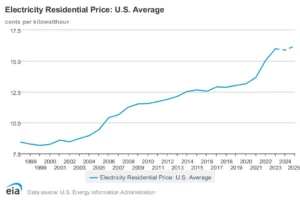
electricity bills. Retail electricity prices rose 7% in 2025 alone, part of a nearly 40% climb since 2021 that has made this decade the fastest period of electricity price growth on record.
Wholesale costs are now 6.1% higher than a year prior — almost double the overall inflation
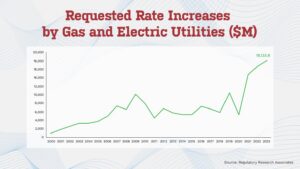
rate” In 2023, utility rate increase requests set a record high with amounts sought being three times higher than those at the beginning of the pandemic in 2020.
But the uptick started even before the pandemic and the inflation that dragged the American
economy in recent years. In 2019, 147 new rate increase cases were filed around the country—that’s the most in nearly 50 years since 1983. According to the U.S. Energy Information Administration (EIA), retail electricity prices have increased faster than inflation since 2022. And, the agency expects that trend to continue through 2026.
Yes, Expensive “Green” Energy Is A Reason
There are many reasons that contribute to these increasing electricity costs. And, those reasons
are different in different parts of the country. But, the fact is the so-called green energy transition is one of those reasons.
Artificially propping up wind and solar energy, rather than letting the market drive which energy sources are the most affordable, reliable and clean, is costing American consumers. The Energy Bad Boys blog looked at the largest rate increase requests across the country in 2022.
Their analysis found that “every single one of the eight companies listed wind and solar investments or the energy transition as one of the primary reasons for raising electricity prices, and multiple companies explicitly cited state mandates for clean energy or GHG reductions to justify the rate increases.”
The largest rate increase in the country came from Pacific Gas and Electric, which cited its commitment to “California’s bold climate and clean energy goals and to actions that reduce
greenhouse gas emissions, including delivering low-carbon energy.”
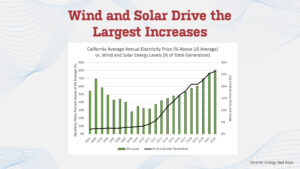
According to the blog, “As wind and solar energy penetration levels began to rise above 5 percent, California electricity prices began skyrocketing, erasing nearly a decade of price normalization with the US average. In 2022, with wind and solar generation levels above 25 percent, the average electricity price in California was 81 percent higher than the national average, compared to a low of 28 percent in 2008 when the Golden State’s generation mix only had 3 percent wind and solar.”
ARC-ES Protects American Consumers
It’s unlikely that the growing demand for more electricity will end anytime soon—and we probably really don’t want it to. That demand is a side-effect of the technology and innovation that fuels our modern lives. Increased electrification for residential resources and transportation will drive demand from everyday Americans to meet their energy needs. And, the growing tech boom in data centers is going to place an unprecedented draw on our energy system. The centers where tech companies house the data that we use every day consume electricity 24/7 and in some case require as much energy as a city.
That’s why we must make smart decisions now for consumers already suffering under rate increases and with looming future demand. Wind and solar energy can and should be part of the mix but only as they can compete with other traditional energy sources like natural gas and nuclear for affordability and reliability. Green-at-any-cost agendas may make for feel good lines in utilities’ annual reports and politician’s rhetoric, but they should not be what drives our electricity mix. Americans need affordable, reliable and clean energy sources and they need leaders that embrace policies ARC Energy Security to make sure we are building an energy future that Americans can both trust and afford.