Affordability 🤝 Reliability
October 4, 2026
While affordability has been top of mind for most Americans these days, there’s another important aspect of energy policy that goes hand-in-hand—reliability. Reliable energy is imperative to the health, safety and prosperity of American families and businesses. We must be able to count on our energy sources to be available and productive when we need them most.
While the Green New Deal crowd would have you believe that natural gas and other traditional energy sources are the nexus of all evil, the fact is they provide consistent power and fuel and have proven to be more resilient during extreme weather and other crises. Over 78% of U.S. electricity generation comes from traditional energy sources like natural gas, coal and nuclear. Over 43% comes from natural gas alone. And, systems powered by these energy sources simply just work better. Only 1 in 628 customers are expected to experience a natural gas outage in any given year. Electric distribution systems have an average of one outage per year per customer.
Beyond where we source our energy, building and maintaining modernized and dependable energy infrastructure like pipelines and power lines is an important factor in guaranteeing our energy is reliable. There are 2.8 million miles of pipeline in the U.S. to ensure energy gets to the consumers that need it. According to the U.S. Pipeline and Hazardous Materials Safety Administration, pipeline systems are the safest and one of the least expensive means to move oil and gas products.
ARC-ES does it all
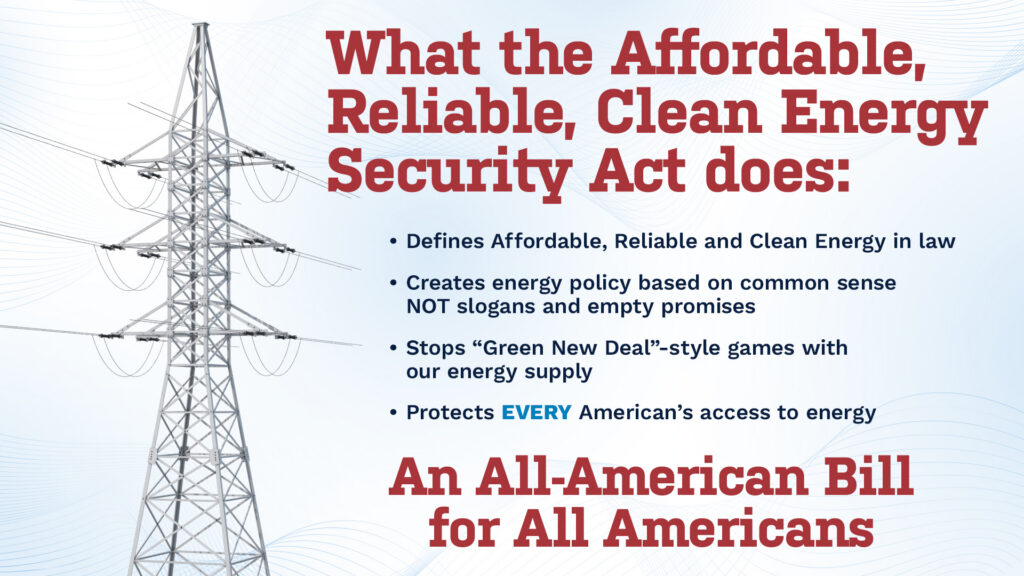
And, that’s why we need a common-sense law that brings balance to our energy policies. The Affordable, Reliable, Clean Energy Security Act (ARC-ES) embraces the affordable, reliable and clean energy principles that TEA has been promoting since day one—providing the perfect formula to ensure America’s energy security. ARC-ES would create simple and straightforward definitions in law for what is affordable, reliable and clean energy.
Putting simple definitions behind these terms will finally create the policy environment necessary to stop the “Green New Deal”-style games that politically motivated extremists have been playing with our energy supply for the last several years. Rather than the government blocking productivity and driving up costs by picking winners and losers, this policy will set fair and sensible rules under which the best energy options for everyday Americans win.
Here’s the details
Introduced by Congressman Troy Balderson (OH-12), this bill would protect every American’s access to their energy birthright. And, the best part, this legislation is simple and built on one of our favorite things here at TEA—good, old-fashioned common sense, not empty green promises and political slogans.
This is how the press release from Rep. Balderson’s office puts it: “Upon enactment, the legislation would require relevant federal agencies—such as the Department of Energy, Department of the Interior, and the Environmental Protection Agency—to review any actions relating to affordable, reliable, or clean energy within 90 days and submit a report to Congress. The bill guarantees that our most affordable and reliable energy sources, including nuclear and natural gas, remain part of the energy mix – a crucial requirement to guarantee affordable and reliable energy for American households and businesses. Agencies would be directed to ensure that rulemaking, grant programs, and policies are updated to reflect and incorporate the definitions established in this bill, and submit a final report to Congress within 180 days detailing their implementation.”
The act provides a common-sense definition for “reliable.” It says energy reliability means “a source of electricity that—except as required during a period of routine maintenance or repairs, has an Effective Load Carrying Capability of 60 percent or greater; is not subject to intermittent availability; and is not subject to routine weather that impacts energy production.”
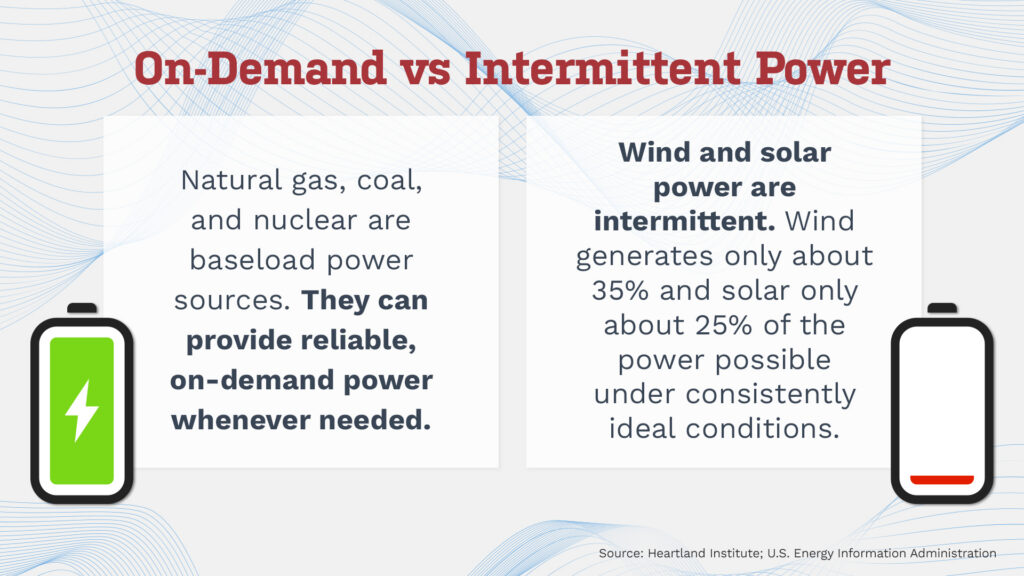
Now, what does all that mean? Well, “Effective Load Carrying Capability (ELCC)” is a mouthful, but it basically means exactly what it says. It’s a measure of how much a power source can reliably contribute to the electrical grid, especially during times of peak demand. According to regional transmission organization PJM, nuclear power has a 95% ELCC and natural gas is nearly 80%. On the other hand, onshore wind energy is 38% and solar is a dismal 10-14%.
Which brings us to the easier-to-understand part of the act that addresses intermittent power availability. Wind and solar are intermittent. Quite simply, they don’t work all the time. And when they stop working, either the electrical grid must find another source or the power goes off. However, natural gas, coal and nuclear are baseload power sources, meaning they can provide reliable, on-demand power whenever it’s needed, and that keeps our power on and saves all of us money.
Energy you can depend on
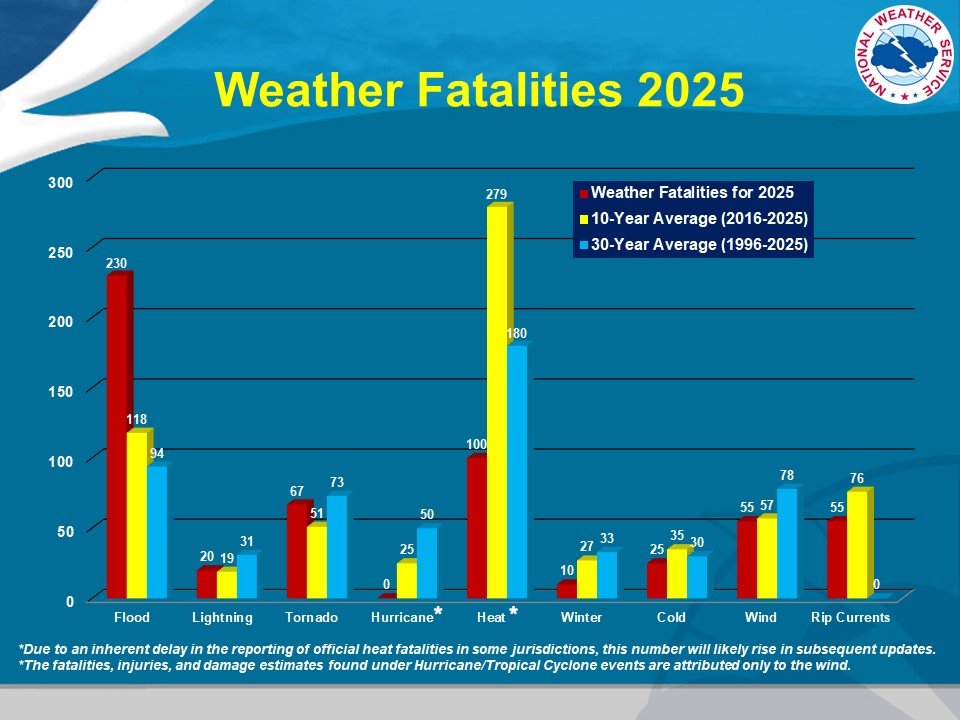
Reliability is so important for obvious reasons. We’ve all experienced power outages and they cost us time and money at best. At worst, if they happen during times of extreme weather, it can be a matter of life or death. According to the National Weather Service, even considering the starkness of winter, extreme heat is by far the top cause of weather-related fatalities. In 2024, extreme heat killed more than twice as many people as any other weather event—and it killed more than three times as many people as extreme cold and other winter weather. If the power goes out and the air conditioning turns off, during a summer thunderstorm or even worse if your home experiences blackouts or brownouts from an overextended and unreliable electrical grid, it can create a truly dangerous situation for many Americans.
Reliability is the part of our energy system that makes all the rest work. And, reliability and affordability are invariably tied together. If a power source can’t stay on, power plants must ramp operations up and down and that makes energy cost more for consumers. That’s why we need ARC-ES—a law that finally recognizes the importance of the whole picture, not just the trendy political slogans of the day.