Affordable Energy Can’t Wait for Washington
Since the dramatic results of the election a couple weeks ago, we’ve been saying that NOW is the time to act on federal Affordable, Reliable and Clean Energy Security (ARC-ES) policy in Washington—either as legislation passed by Congress before the end of the year or as an executive order from the President. This would ensure that when the chaos of the new Congress kicks off in January, that common-sense parameters for our energy policy are already in place.
But, Washington isn’t the only place for common-sense energy policy that guarantees affordable, reliable and clean energy for everyday Americans. In fact, looking to the states to embrace policies that work for American families is often more productive than waiting on the D.C. elite.
How the States Can Do ARC-ES
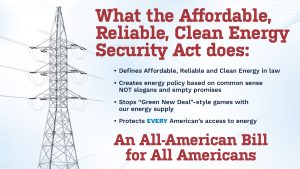
That’s why we partnered with the American Legislative Exchange Council (ALEC) to craft model state legislation that gives state and local leaders guidance for implementing ARC-ES in their own backyards. Much like the federal legislation, TEA’s model state legislation lays out simple definitions for what would be considered affordable, reliable and clean energy sources.
The model legislation defines an affordable energy source as:
- Having a stable and predictable cost.
- Providing a cost-effective means of heating, cooling, and generating electricity.
- Delivering substantial savings to homes and businesses compared to other resources based on the average cost per unit of energy output for the past five years.
Reliability is defined as:
- Readily available to meet energy demands 24/7 with minimal interruptions during high usage periods.
- When used for power generation, the resource must demonstrate a minimum capacity factor of fifty per cent.
- Electricity output must be dispatchable 24/7 and capable of ramping up or down within one hour to stabilize the electrical grid.
And, clean energy is defined by:
- Releasing reduced air pollutants.
- Including energy generated by nuclear reactors and natural gas.
Ohio, Louisiana and Beyond
More than a few states have already taken the first steps to establish ARC-ES laws. As we speak, ARC-ES legislation in Ohio is working its way through the legislature. Senate Bill 294 was introduced in the state senate last fall and includes all the criteria needed to establish affordable, reliable and clean energy standards for Ohio. The state senate passed the legislation in June and the bill is currently moving through the process in the state house. We hope to see it passed before the end of the year.
In 2023, Ohio also put in place a “natural gas is green” policy that codified the environmental benefits of using natural gas. As we at TEA have been telling you for years, natural gas is the number one reason the U.S. has been a world leader in reducing emissions—even if the green-at-any-cost crowd wants you to believe otherwise.
Louisiana already delivered one of the strongest examples and greatest victories for ARC-ES legislation in the states. In 2025, they became the first in the nation to codify into law a guarantee of affordable, reliable and clean energy for homes and businesses statewide, positioning the state as a powerhouse of economic growth and innovation.
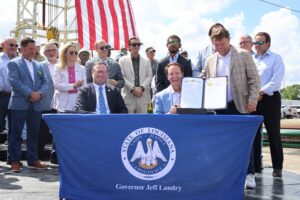
Among other benefits, the bill strengthened Louisiana’s economic momentum and global competitiveness by attracting continued investment from leading corporations and prioritized domestically produced fuel sources to reduce dependence on foreign nations.
States like Tennessee and Indiana have enacted laws like the “natural gas is green” legislation passed by Ohio. Both states enacted the policy in law in April 2025. Indiana Sen. Jim Buck, R-Kokomo said he fashioned his bill after the Ohio law that similarly defined natural gas as clean energy, as well as the model legislation put forth by ALEC. In March 2026, the Idaho legislature voted in support of state energy sovereignty through House Concurrent Resolution 32.
Oklahoma, West Virginia, Michigan, New Hampshire and Mississippi have all considered legislation that draws on the principles of ARC-ES for inspiration and would apply common-sense definitions to their states’ energy policies. While these bills may not have advanced into law, it’s clear that leaders are seeing a need for ARC-ES-style common-sense energy policies across the nation.
The People Want Common-Sense Affordability
Nearly 60 million Americans from every single state in the nation say they consider energy affordability an important issue. These citizens may not know all the nuances of the how the electrical grid works. But, they do know that energy is a factor in almost every aspect of our daily lives and that’s why keeping it affordable, reliable and clean is so important.
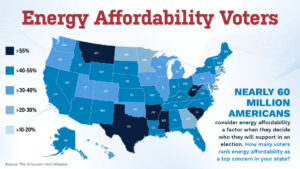
Rising costs at the grocery story, at the gas pumps and in the bills piling up on the kitchen table are tangible reminders of the struggle we are all facing. At TEA, we’ve started calling these seemingly ever-growing costs a “Life Tax” because they seem to be coming at us from every walk of life. But, that’s not just a feeling, it’s reality. And, that’s because the rising cost of energy underlies the rising costs of literally every other product and service we use.
That’s why state leaders shouldn’t wait on Washington to make affordable energy happen for their constituents. They have the tools to take the lead in state capitols all over this country. It’s time for states to take their power back—literally—and pass ARC-ES legislation.