

An Affordable America Begins With Affordable Energy
March 6, 2026
We hear a lot about the “affordability crisis” these days. Some people say it’s about a lack of
affordable housing. Some people say it’s about the cost of consumer goods like groceries. Some
say it’s about people being priced out of the middle class. Some say it’s all about politics and
the economic policies of the current administration.
It’s hard to tell if any of these theories are right or just political rhetoric and over-the-top
headlines. But, there is one common denominator underlying all these theories—energy
affordability.
Energy literally fuels every aspect of our lives, so when it becomes unaffordable, that drives up
the cost of everything else. When gasoline prices go up, so does the cost of transporting
groceries, home goods and all the other things we buy at the corner store. When the cost of
electricity goes up, so does the cost of construction, manufacturing and every other business.
Many energy sources are even components in the very products we buy—petrochemicals
derived from oil and natural gas are ingredients in over 6,000 everyday products and high-tech
devices.
So, it’s ironic that the very people screaming about affordability these days are also part of the
green-at-any-cost energy crowd.
Let’s not be like California
$9 trillion has been spent globally over the last decade on wind, solar, electric vehicles, energy
storage, electrified heat and power grids with very little result. Despite all that investment in
renewable energy sources, fossil fuels still supply over 80 percent of all global needs today.
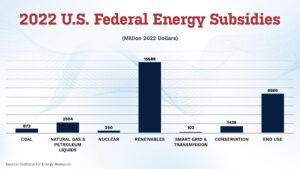
In the U.S., taxpayer-funded renewable energy subsidies made up 85 percent of all federal
energy-related support between 2016 and 2022. Meanwhile, the retail price of electricity has
risen consistently during that time. From 2021 to 2024, there was a 21% percent increase in the
average price American families paid for electricity.
Take California as an example. Rather than building and investing in infrastructure that will
provide affordable, reliable and clean energy for the families and businesses in the state,
California’s leaders have taken the state in the opposite direction.
According to a study from University of Southern California, since 1982, California’s oil
refineries have decreased by nearly 70% from 43 to 13 operable refineries. That study predicts
that if the trends continue, Californians could be paying as much as $8 per gallon of gasoline
this year.
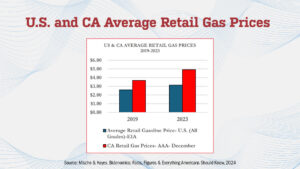
While $8/gallon is an eye-popping figure, California’s drivers have been paying far more than
the average American for gasoline for years now. In 2019, when most Americans were still
paying around $2.50/gallon, Californians were already closing in on $4/gallon. And, under
President Biden’s inflation, while we all suffered spiking gas prices, California still led the pack
with the dubious honor of breaking the $5/gallon mark.
ARC ES is the answer
That’s why TEA supports a common-sense energy solution that will make energy affordability
for everyday Americans the top priority — the Affordable, Reliable, Clean Energy Security Act.
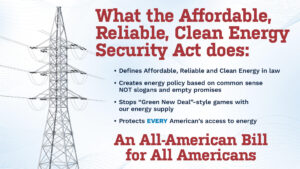
This legislation would create simple and straightforward definitions in law for what is
affordable, reliable and clean energy. Putting simple definitions behind these terms will finally
create the policy environment necessary to stop the “Green New Deal”-style games that
politically-motivated extremists have been playing with our energy supply for the last several
years. Rather than the government blocking productivity and driving up costs by picking
winners and losers, this bill will set fair and sensible rules under which the best energy options
for American families and businesses win.
Introduced by Congressman Troy Balderson (OH-12), this bill will protect every American’s
access to their energy birthright. And, the best part, this legislation is simple and built on one of
our favorite things here at TEA—good, old-fashioned common sense, not empty green promises
and fearmongering.
The ARC ES Act defines “affordable” energy as “a low cost method” of producing eneryg,
“factoring in the full system cost of each generation source.” Often when you see cost statistics
for different energy sources, they don’t account for hidden factors—those government
subsidies that go heavily to “green” energy sources like wind and solar, the cost of cycling our
power supply up and down to accommodate these intermittent and unreliable power sources
and added infrastructure costs trying to get “green” energy to the people who need power. But
this act would guarantee that when the government analyzes the cost of energy going forward,
it will look at the WHOLE picture.
Give the American people what they want
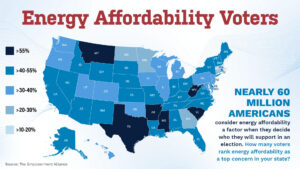
Nearly 60 million Americans from every single state in the nation say they consider energy
affordability when deciding how they will vote. These voters may not know all the nuances of
the how the electrical grid works. They may not know the questionable aspects of the
renewable energy supply chain that relies on nefarious foreign governments. But, they do know
that energy is a factor in almost every aspect of our daily lives and that’s why keeping it
affordable, clean and reliable is so important.
Elected representatives looking for an “affordability” issue that really connects to their
constituents’ daily lives should take note. The ARC Energy Security Act is THE solution and
exactly the kind of policy these Energy Affordability Voters are looking for from their leaders.
As we have been saying for years, energy affordability underlies nearly every economic issue
facing American families and businesses. It keeps the costs of manufacturing and shipping low.
It fuels reliability that keeps our households safe and healthy and our workplaces productive. It
supports economic growth and job creation for all. There is no greater issue that our leaders in
Congress and the White House can tackle to ensure that we continue to make America great for
everyday families now and in the future.