
Even at Climate Week, Natural Gas Shines
October 3, 2025
Need to know
- Check out TEA’s website for the latest in energy news and opinion.
- TEA Takes: Wind & solar projects stick taxpayers with the bill coming and going.
- Opinion: Democratic energy prices hit home.
- BP to push ahead with $5B project in sharpened US focus.
- EVs are cheaper than gas cars in America — but not for long.
- Opinion: Democratic energy prices hit home.
- Trump launches a new bid to save coal.
- Opinion: All of the above energy or best of the above.
- State regulators approve first large wind farm in Wisconsin since 2011.
- Democratic House bill would reverse Trump energy policies.
- Opinion: This is how America will achieve energy dominance.
- Trump team using shutdown to eviscerate climate spending in agencies.
Common sense
PROTECTING THE AMERICAN CONSUMER: The narrative around data centers is changing. Some, including Energy Secretary Chris Wright and Florida Gov. Ron DeSantis, argue that consumers should not bear the brunt of the rising electricity costs.
Why it matters: Energy-hungry data centers are prompting a rush for electricity after decades of stagnant growth, and some independent grid operators warn power shortages could be ahead. Gov. DeSantis is absolutely correct that average consumers “should not be subsidizing the exorbitant power (and water) usage of AI data centers.”
Consider:
- Data centers, while they provide needed jobs and economic development to communities, also put upward pressure on electricity prices.
- However, families and small business owners should not foot the bill for these massive projects.
- Wright’s idea that data centers should be ready to bring their own power generation certainly has merit.
The vast majority of Americans (including low- to middle-income individuals, the elderly, and the disabled) can’t afford skyrocketing utility bills. Many live paycheck to paycheck, with nearly one-third of our households having an income of less than $50,000 per year, according to the US Census Bureau.
Already, we’ve seen examples of a gas-fired power plant co-located on a data center site in western Pennsylvania that was converted from a coal plant, as well as an xAI data center in Memphis that installed natural gas generation. Both are great examples of providing “behind-the-meter” power to a large data center. The point is, developers have other options that don’t require putting further strain on the grid.
But here’s a counter-argument to those who blame rising electricity prices on the AI data center boom. Mario Loyola, professor at FAU and senior fellow at the Heritage Foundation, argues that the real problem is rules that have made it difficult for electricity supply to keep up with demand. Considering the 4 years of new regulatory burdens under Joe Biden and the broken permitting system, he does make a strong point.
Bottom line: Data centers are increasing demand for electricity, there’s no other way to cut it. To keep the burden off the backs of consumers, we have two options: require behind-the-meter power, or scale new generation faster.
Nonsense
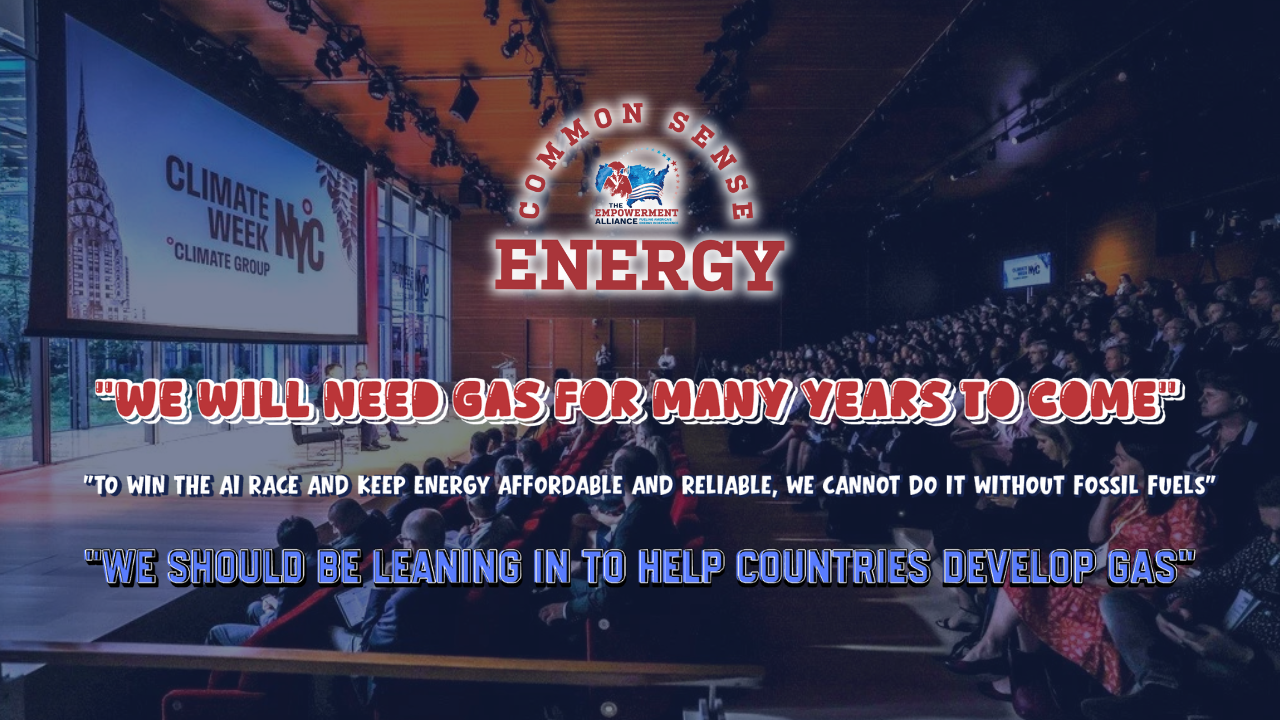
HYDROCARBONS ARE NOT THE ENEMY: Climate Week NYC has met since 2009, but this year the nearly unthinkable happened. Policymakers and leaders spoke positively about natural gas. As the headline indicates, we bet that wasn’t on many bingo cards.
Why it matters: Instead of continually vilifying traditional energy sources, some are finally realizing the need and vital role they play in the world economy. We ask, “Gee, what took you guys so long?”
Consider:
- One World Bank official admitted: “Gas has to be discussed and pursued” for providing baseload power.
- This is quite significant (shocking, perhaps) given the organization stopped financing new upstream oil and gas projects in 2019.
- Other international leaders, once very critical of natural gas, are now extolling its virtues.
Finally, there is Captain Obvious, better known as the European Commission’s director-general for energy, Ditte Juul Jørgensen, who told audiences:
“The energy transition will continue to be our path, but we will need gas for many years to come.”
Good news, Mr. Jørgensen. America has a century’s worth of fuel beneath its feet.
It’s affordable, reliable, and clean. Thanks to liquefied natural gas (LNG), we can also ship it to our allies and partners abroad.
There was still plenty of theatrics surrounding Climate Week 2025.
Protestors gathered in mass ahead of the event, while Greenpeace USA activists deployed a 160-foot-long “Climate Polluters Bill” demanding a new “polluter tax” on the global profits of oil and natural gas corporations.
So the silliness from the climate crusade and its radical activists hasn’t stopped. However, thankfully, the decision-makers are — at long last — coming to their senses and acknowledging that traditional energy sources can benefit both the world’s economy and the environment.
Bottom line: The world needs natural gas, today and far into the future. We’re delighted that some in the climate movement finally admit that.
A look ahead
Nothing on the calendar for next week as the federal government is currently closed!
Quote of the week
“But we’re trying to protect the American consumers, to have affordable electricity. And we want data centers to be able to locate here. We want semiconductor manufacturing to come back here. We want aluminum and steel production to come back to the United States. That takes energy.”