
No, Hydrocarbon Demand Has Not “Peaked”
September 12, 2025
NEED TO KNOW
- Check out TEA’s website for the latest in energy news and opinion.
- Afternoon TEA: Dirty secret behind ‘green’ energy subsidies.
- TEA Takes: Green Movement in retreat.
- US Senators introduce bipartisan Taiwan LNG bill.
- White House outlines priorities on oil and gas, offshore carbon storage.
- California’s “progressive” policies stifle technological progress.
- Shell pulls plug on biofuels plant.
- Opinion: At long last, clarity on climate.
- Italy, US agree to boost LNG ties, infrastructure investment.
- Report: China leads clean energy revolution, but also CO2 pollution.
- EU Court and Gov Shapiro say natural gas is ‘environmentally sustainable.’
- Greece emerges as major hub for US LNG exports.
COMMON SENSE
TARGETED REVIEWS, SWIFT DECISIONS: AI’s soaring energy demands and rising household power bills may ease political resistance to a major permitting bill this year, as outlined in the American Petroleum Institute’s plan. Both Democratic and Republican leaders have expressed frustration with the current permitting process.
Why it matters: The trade association’s proposal is to set deadlines and then enforce them, thus eliminating roadblocks and allowing America to “Build, Baby, Build,” the second point in The Empowerment Alliance’s Common Sense Energy Agenda.
The typical “Delay, Baby, Delay” protocol won’t cut it. Energy permits often take longer than getting a four-year college degree, and that’s not practical.
With power demand set to jump 40% by 2040 and bills already soaring, the time to act is now. The data center boom and surging electricity needs could be a major tailwind for gas-fired power and the pipelines to fuel it.
Consider these policy solutions:
- Set clear guidelines for legal challenges.
- Fix rather than cancel permits.
- Provide long-term certainty through nationwide permits.
- Keep projects moving once reviews are complete.
The permitting process should serve consumers — not lawyers — and support builders, not bureaucrats. Securing permits should mean a project is ready to move forward, but too often, activist lawsuits drag projects into court even after thorough reviews.
The answer: Tort reform.
Today, there are virtually no limits on who can sue or how long they can wait to do it, leaving infrastructure projects stuck in limbo. Tort reform would limit lawsuits and reduce the damages awarded in civil cases, forcing plaintiffs who sue and lose to cover the legal costs.
By reducing the threat of large, protracted lawsuits, tort reform allows contractors and developers to better predict their financial risk. A less litigious environment will, in turn, encourage investment in construction and new infrastructure development.
We share API’s vision of building new infrastructure allowing energy to flow faster and more easily, which could make energy more affordable for consumers.
In the past, delayed projects cost our communities good jobs and valuable investments.
It also bolsters our national security. Updated infrastructure will provide greater access to natural gas, electricity transmission, gasoline, and other forms of energy needed to power our national defense.
Bottom line: Too often, energy projects end up in limbo, buried in endless reviews and lawsuits. We all have deadlines. Maybe the permitting process should too.
NONSENSE
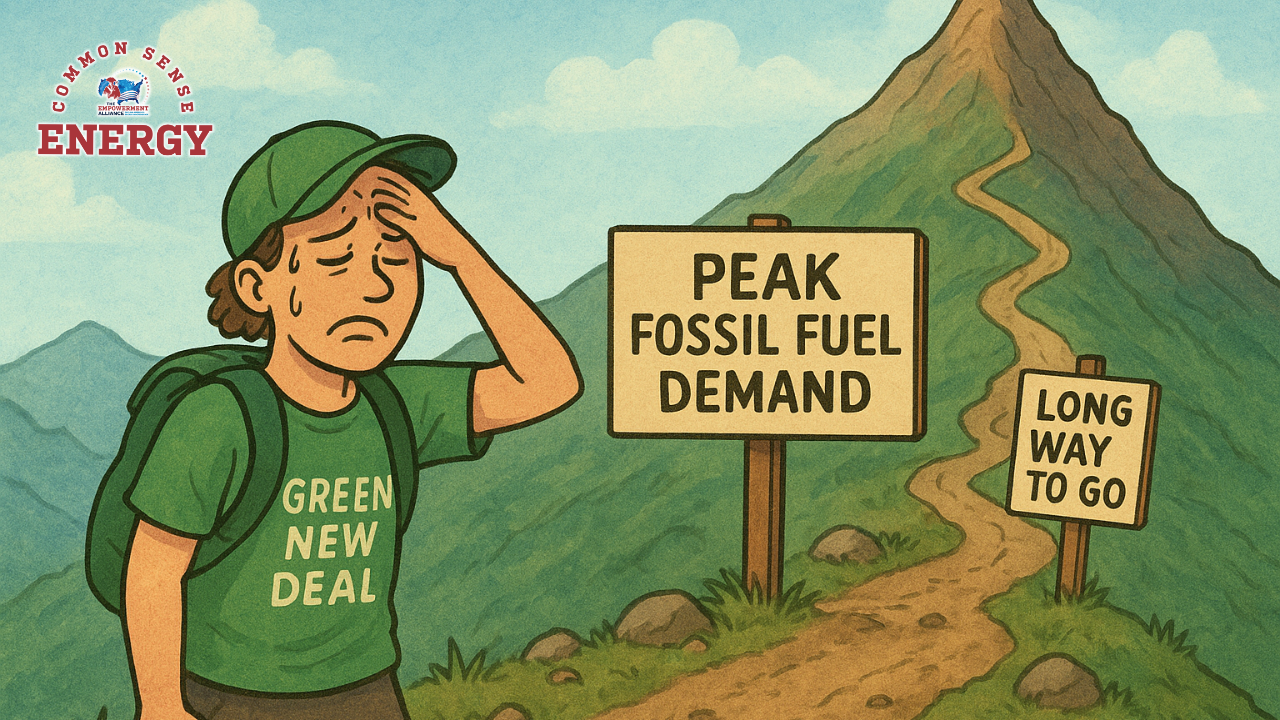
STILL IN THEIR PRIME: The idea that fossil fuels have hit their peak is beyond preposterous. As this Bloomberg opinion piece spells out, that myth is crumbling quickly.
Some projected that natural gas and oil would hit their zenith by the end of the decade, with 2029 as the presumed target date. That was an estimate — and a false one at that.
Why it matters: For the last few years, climate extremists and energy policy makers have convinced themselves the world was certainly moving away from fossil fuels.
Breaking news: It is not.
The reasons are simple. The world wants fossil fuels. The world needs fossil fuels.
Consider:
- The annual report being prepared by the International Energy Agency, which represents the views of the world’s richest nations, shows the alternative — decades more of robust fossil-fuel use, with oil and natural gas demand growing over the next 25 years — isn’t just possible, but highly probable.
- Natural gas is the optimum source of energy, as it is affordable, cleaner than coal and, more reliable than renewables, and with nearly a century’s worth under our feet, abundant.
- The shale revolution began in the early 2000s and, more recently, there’s been a surge in liquefied natural gas (LNG) exports from Louisiana, Texas and other states.
In model language, the ARC Energy Security Act defines “affordable energy” as having a stable and predictable cost with substantial savings compared to other resources, being reliably available 24/7, and including energy generated by hydrocarbons as a resource.
As the writer states, the world isn’t performing an “energy transition” rather an “energy addition,” where renewables are mixed with oil, natural gas and coal. Regardless of well-intended green aspirations, that will remain the case for decades, unless governments impose significant changes.
Bottom line: The IEA spells it out very clearly: the world’s use of oil and gas will continue to climb for decades. Affordable, Reliable and Clean natural gas is here to stay.
A LOOK AHEAD
Hearing On Appliance and Buildings Policies: On Tuesday, September 16, the House Energy and Commerce Subcommittee on Energy will have a hearing on “Appliance and Building Policies: Restoring the American Dream of Home Ownership and Consumer Choice.”
Hearing On EPA Enforcement: On Tuesday, September 16, the House Oversight and Government Reform Subcommittee on Federal Law Enforcement will have a hearing on “From Protection to Persecution: EPA Enforcement Gone Rogue Under the Biden Administration.”
Hearing On Permitting Reform: On Tuesday, September 16, the House Energy and Commerce Subcommittee on Environment will have a hearing on “From Gridlock to Growth: Permitting Reform Under the Clean Air Act.”
Hearing On Nominations: On Wednesday, September 17, the Senate Environment and Public Works Committee will have a hearing on EPA and Army Corps of Engineers nominations.
FERC Open Meeting: On Thursday, September 18, the Federal Energy Regulatory Commission will hold an Open Meeting of the Commission.
QUOTE OF THE WEEK
“Net zero 2050 is just a colossal train wreck … It’s just a monstrous human impoverishment program and of course there is no way it is going to happen.”