States Face Looming Energy Crisis
November 21, 2025
Need to know
- Check out TEA’s website for the latest in energy news and opinion.
- Afternoon TEA: Voting for the “cure” that caused the disease.
- TEA Takes: Social Security, Medicare, and Energy Security.
- West Va. poised to enter the natural gas power plant production world.
- Industry groups ask the Supreme Court to block Calif. climate disclosure rules.
- Billion-dollar energy company with Middle East ties builds Texas wind farm.
- After climate push, energy companies return to fossil fuels in Europe.
- New England is expected to have enough electricity to meet winter demand.
- Biden gave away billions for ‘climate justice’ without public consent.
- More consumers are falling behind on their utility bills.
- Utah unveils plans for a large nuclear hub.
- The remarkable rise of natural gas.
- Biggest gas pipeline buildout since ’08 fuels Trump energy push.
Common sense
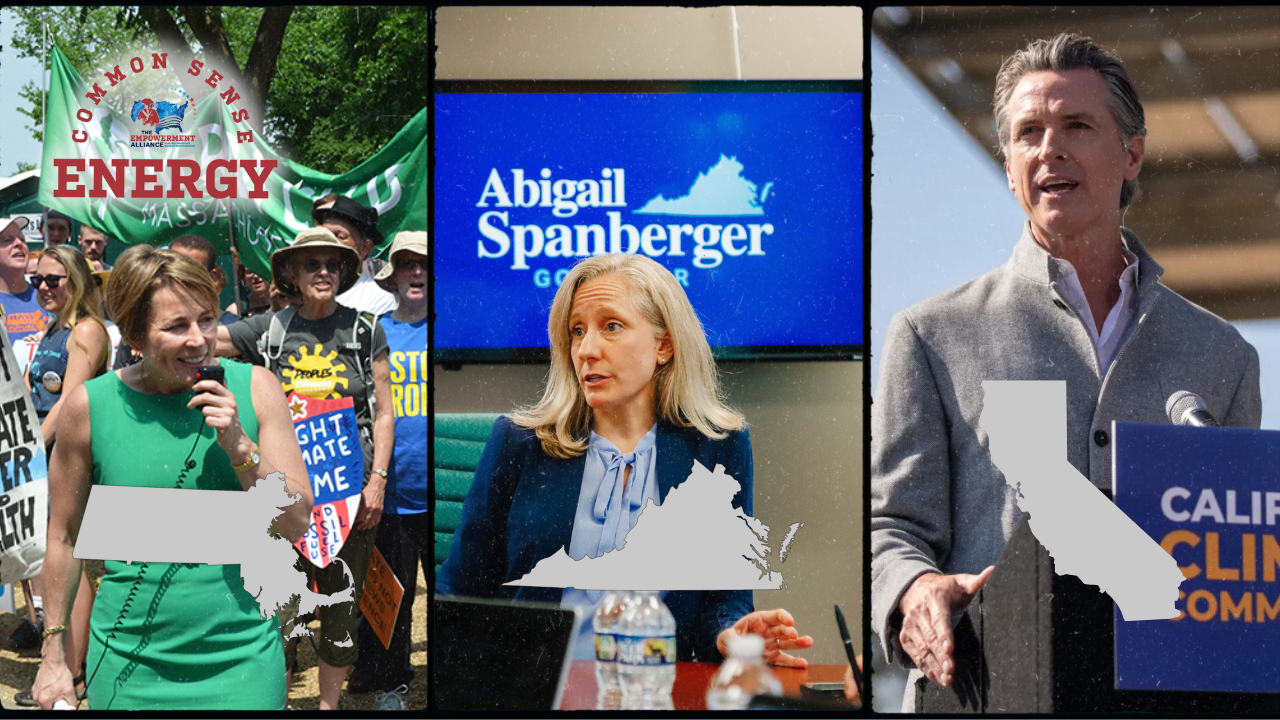
POLITICAL POSTURING OR POLICY SHIFT?: The natural gas industry sees potentially a big opening after the Virginia election. But the question remains, will the new governor-elect, Abigail Spanberger, use this opportunity to actually lower electricity rates for consumers as she promised?
Or will she return to her former green-at-any-cost policies that drive up prices?
Why it matters: This could also be part of the national narrative as some blue-state leaders, like Pennsylvania Gov. Josh Shapiro, begin to recalibrate their positions. The push for renewables (at any cost) has slowed, thanks to President Trump. States like New York have been hit with the reality that affordable energy doesn’t come from wind and solar, so they’re turning to natural gas as a solution.
Spanberger will take over a state in the middle of a data center boom. Virginia has more of these than any other state, particularly in the northern portion, which features an area known as “Data Center Alley,” and more than 640 total.
Consider:
- Virginia’s data centers have massive energy demands, currently consuming about 26% of the state’s electricity, with forecasts predicting a need for approximately 13.3 gigawatts by 2038.
- Meeting this demand requires significant new power generation and transmission infrastructure, which strains existing grids and raises concerns about environmental impact.
- Jay Jones, the newly elected Democratic attorney general of Virginia, also ran on a pledge to lower electricity costs.
Pennsylvania, meanwhile, will no longer be part of the RGGI, a regional climate agreement among Northeast US states.
Gov. Shapiro has cited the political divide on the topic but said he wants affordable energy for his state’s residents and to create more jobs in the energy sector.
We must take both governors at their word, but the real test will be the energy choices they make for their states. For the record, Spanberger has not stated her position on the future use of natural gas in Virginia.
Bottom line: Democrats who ran on a message of energy affordability now face a difficult test. Will they turn to natural gas for real price relief, or will they stick to their green-at-all-cost ideology?
Nonsense
BAD ENERGY POLICY COSTLY: Other states just don’t get it regarding affordable energy. Massachusetts, Illinois, and California all have in place energy policies that result in higher consumer costs.
This proves that bad energy policy isn’t defined by geography, but rather ideology. The real driver of skyrocketing utility bills in Massachusetts is state climate policy, according to a Republican seeking the state’s highest office.
Why it matters: Obviously, these states need legislation like that introduced in Ohio and already passed in Louisiana. This ensures natural gas and nuclear are in the mix and that affordable, reliable, and clean energy is at the forefront of states’ energy mixes.
ARC Energy Security is smart legislation that squarely addresses that issue.
Consider:
- In Illinois, an energy policy package incentivizing battery storage passed the General Assembly with only Democratic support and will likely become law, as Gov. JB Pritzker pledged to sign it.
- Environmental groups supported it. Manufacturing opposed the measure, obviously fearful of increased costs.
- A new surcharge, beginning in 2030, will impact residential and business customers.
California is a prime example of the wrong policy, as this opinion piece states. Its energy system plan cuts out petroleum, natural gas, and nuclear power without a reliable plan to meet consumer demand.
But the problem is not technical, but political. The result is that California ranks among the most expensive states in the nation for energy.
That is because politics, not markets, are determining how energy is produced and delivered. To be specific, green mania has run wild for too long.
- Massachusetts has a similar problem. Democratic leadership in these states is paving the way for disaster, with consumers paying the price literally.
- About 80% of the state’s electricity is generated by natural gas. Yet, the antiquated 1920 Jones Act, along with pipeline restrictions, means it must import liquefied natural gas from abroad at high prices during the winter months.
- Consequently, its average residential electricity rates are 72% higher than the rest of the country.
Bottom line: Swap natural gas for renewables, get higher rates. Some states haven’t figured it out — and their consumers are paying more every month.
A look ahead
Nothing on the calendar for next week, enjoy the Thanksgiving holiday! The Common Sense Energy newsletter will resume on Friday, December 5th.
Quote of the week
“It’s not just that they care about renewables more than they care about affordability; they care about blocking natural gas pipelines more than they care about promoting renewables.”
— Bloomberg Columnist Matthew Yglesias