Curbing Federal Overreach Means A More Prosperous Republic
April 16, 2026
Need to know
- Check out TEA’s website for the latest in energy news and opinion.
- TEA Takes: Want to know climate truth? Believe the opposite when the media says something is false.
- Developer of Mass. offshore wind farm sues turbine manufacturer.
- New Jersey lifts moratorium on nuclear facilities to tackle affordability crisis.
- Data centers are straining the grid. Can they be forced to pay for it?
- As energy costs rise, states back off ambitious climate goals.
- Chevron says Venezuelan oil imports help curb US gas prices.
- Trump tells the UK to “drill, baby, drill” for North Sea oil.
- Iran declares Strait of Hormuz completely open during ceasefire.
ARC in the states
- VIDEO: The Heartland Institute’s panel on The Affordable, Reliable, Clean Energy Model.
RealClear
- Affordable, Reliable, Clean story stream.
Common Sense
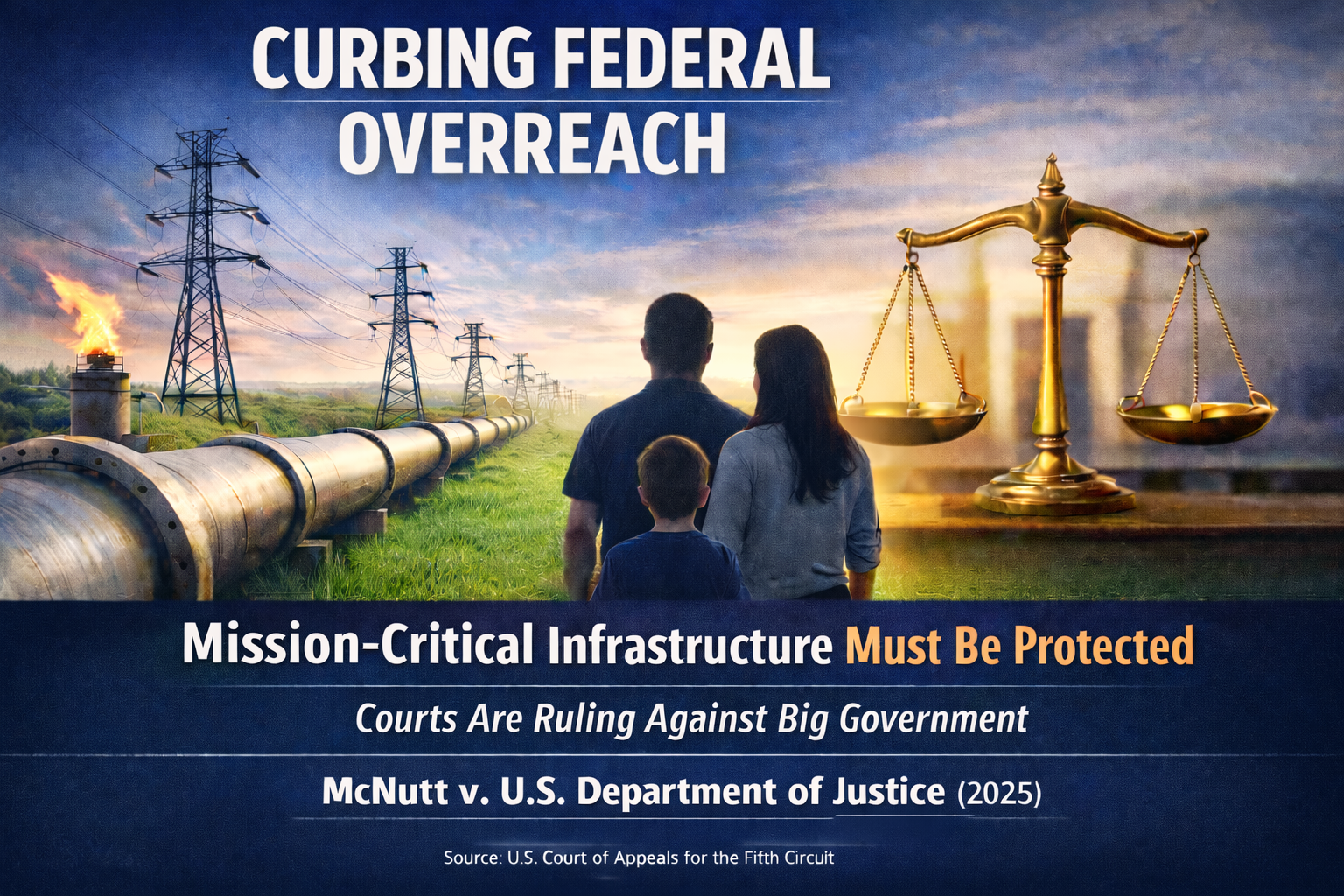
Why it matters: The court held the law exceeds Congress’ authority under the Taxing and Necessary & Proper Clauses, leaving the Commerce Clause untested.
While focused on home distilling, the ruling signals potential limits on the broader role of federal regulatory power. For infrastructure, that matters.
Consider: The logical extension could curb federal barriers — like the Endangered Species Act-related restrictions — and theoretically block mission-critical infrastructure.
- Limits on federal permitting power. Projects like pipelines or LNG terminals often face National Environmental Policy Act reviews and the Endangered Species Act restrictions, as well as Federal Energy Regulatory Commission oversight.
- More authority shifts to states. The logic of McNutt reinforces federalism, meaning federal agencies lose leverage over infrastructure.
- States gain control and, as a result, developers should face fewer nationwide regulatory barriers.
Remember the Mountain Valley Pipeline fiasco as a prime example. The 303-mile project officially went into service and began flowing natural gas on June 14, 2024, marking a major victory for its developers and federal proponents after a decade of delays, legal battles and cost overruns.
For infrastructure, it could mean easier approvals and less delays building in pro-development states.
Recent moves reinforce the trend: Rescinding the Obama-era Endangerment Finding removes $1.3 trillion in regulatory burden, while rolling back CAFE standards helps keep vehicles affordable.
Next, the courts need to revisit Gonzales v. Raich (2005) — another expansion of federal overreach.
Nonsense
- The Ninth Circuit Court of Appeals has rightfully quashed a climate lawsuit brought by 18 young people in California against the U.S. Environmental Protection Agency alleging that the agency’s “discounting” policy unlawfully discriminates against children.
- In a ruling issued on April 9, the court affirmed a lower court’s decision to dismiss the case on the basis that the youth plaintiffs lacked standing, or the criteria necessary to bring a case in court.
- That determination could be a troubling sign for the Lighthiser v. Trump youth climate case challenging several of President Trump’s pro-fossil fuel executive orders.
A look ahead
Hearing On Interior Budget: On Monday, April 20, the House Appropriations Subcommittee on Interior, Environment, and Related Agencies will have a hearing on the Department of Interior budget.
Hearing On DOE Budget: On Tuesday, April 21, the Senate Energy and Natural Resources Committee will have a hearing on the Department of Energy budget.
Hearing On DOE Budget: On Tuesday, April 21, the House Intelligence (Permanent) Subcommittee on the National Intelligence Enterprise will have a closed hearing on the Department of Energy budget.