A Tale of Two Energy Policies
August 20, 2026
Need to know
- Check out TEA’s website for the latest in energy news and opinion.
- TEA Takes: Fair question: Who’s paying for climate reporting in the mainstream media?
- China’s coal-to-gas industry set to triple by 2030, Rystad says.
- Power crunch puts West Texas at risk of rolling blackouts.
- How $600B of Biden’s clean energy funding escaped Trump’s cuts.
- Oil prices near one-month high as Hormuz standoff deepens.
RealClear
- Opinion: Who Killed Offshore Wind?
- Woke 1.0 Is Still Alive In The Democrats’ Energy Agenda.
Common Sense
MOUNTAIN MESSAGE: West Virginia has a new plan for data center acceptance.
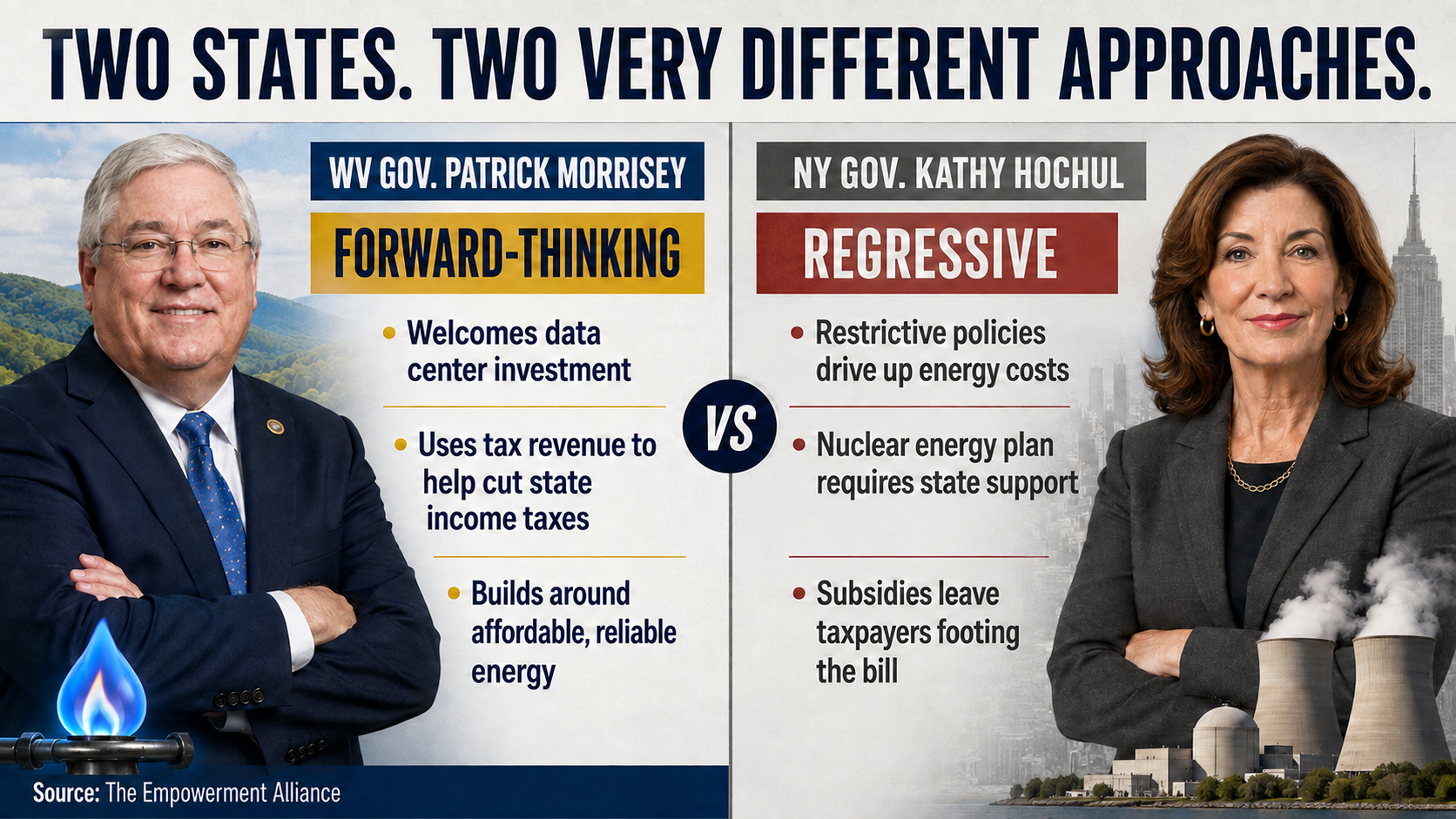
Why it matters: A strategy outlined by Republican Gov. Patrick Morrisey highlights a state law that would steer half the sector’s tax revenue toward reducing and possibly eliminating statewide income taxes. We applaud this forward-thinking approach from an energy-rich state that could benefit economically from new investments in technology.
Consider: Gov. Morrisey not only welcomes data centers with open arms, but his novel idea is one that’s worth pursuing.
- Last week he unveiled a seven-point framework for building data centers in West Virginia, following through on a 2025 law that removes local control over the sector in favor of statewide standards meant to attract hyperscalers.
- Technology has long been sought in the Mountain State, known more for coal and natural gas than Information Technology centers and computer hubs.
- Gov. Morrisey has urged data center developers to relocate to his state amid growing backlash in neighboring Virginia and other states.
In addition, he says his state has learned from other states’ failures.
“Across the country there’s a national debate underway and people are hearing a lot about data centers. A lot of states rushed into the sector without a viable plan. In West Virginia we’re not doing that,” he said in remarks alongside state legislative leaders.
Under its data center law, half the sector’s tax revenue will go toward reducing — and potentially eliminating — the state income tax, currently near the middle nationally.
The rest will be divided among the host county (30 percent), other counties statewide (10 percent) and local infrastructure upgrades (10 percent), which seems reasonable should the plan be implemented.
“Across the country there’s a national debate underway and people are hearing a lot about data centers. A lot of states rushed into the sector without a viable plan. In West Virginia we’re not doing that,” he said in remarks alongside state legislative leaders.
Under its data center law, half the sector’s tax revenue will go toward reducing — and potentially eliminating — the state income tax, currently near the middle nationally.
The rest will be divided among the host county (30 percent), other counties statewide (10 percent) and local infrastructure upgrades (10 percent), which seems reasonable should the plan be implemented.
Bottom line: Gov. Morrisey’s plan could work — and it’s worth exploring if it can lower income taxes in one of the nation’s poorest states while creating jobs in a growing industry.
Nonsense
NEW YORK STATE OF MINDLESSNESS: New York Gov. Kathy Hochul has consistently waffled on energy policy. After making opposition to natural gas central to her leftist climate agenda, rising consumer costs and political pressure have forced a pivot.
Why it matters: Her latest move is to go all-in on nuclear energy. We totally support nuclear energy as a viable option, but had Gov. Hochul embraced a balanced plan that included natural gas, her state probably would not be in this mess.
Consider:
- The hope is that a bounty of reliable power would spur economic development, stabilize soaring utility bills and propel New York into an era with plentiful clean electricity.
- Augmenting the state’s nuclear fleet would add roughly $50 billion in benefits to the electric grid by 2050, according to the New York State Energy Research and Development Authority.
- But — and it’s a sizable but — the vision could sputter under the technology’s immense costs and protracted regulatory timeline. A spate of new reactors could require $15 billion to $24 billion in public subsidies, a state analysis found.
Imagine that. A liberal governor with her hand out, wanting more taxpayer funds.
Indian Point supplied about 25% of New York City’s electricity before public pressure forced its closure in 2021. Fossil fuels filled the gap, with gas and oil now supplying more than 85% of electricity in New York City and Long Island.
Instead of expanding natural gas in New York, Gov. Hochul has fought it tooth and nail from her first day in office.
The New York Post reports that Hochul rejected natural-gas development through fracking and said New York would instead pursue wind, solar, geothermal and nuclear energy. She also pushed to prohibit fossil-fuel equipment in most new buildings in 2023.
Indian Point supplied about 25% of New York City’s electricity before public pressure forced its closure in 2021. Fossil fuels filled the gap, with gas and oil now supplying more than 85% of electricity in New York City and Long Island.
Instead of expanding natural gas in New York, Gov. Hochul has fought it tooth and nail from her first day in office.
The New York Post reports that Hochul rejected natural-gas development through fracking and said New York would instead pursue wind, solar, geothermal and nuclear energy. She also pushed to prohibit fossil-fuel equipment in most new buildings in 2023.
Bottom line: If Gov. Hochul had not consistently rejected affordable, reliable, clean energy, such as natural gas, she wouldn’t be lobbying for state-supported subsidies for energy today.
Midterm spotlight
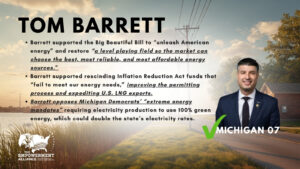
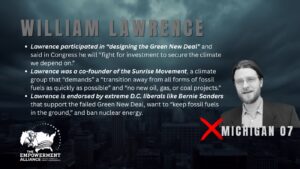
- Michigan’s 7th Congressional District: Michigan’s Energy Abundance is on the Ballot.
A look ahead
Nothing on the calendar for next week.
Quote of the week
“Who controls what happens there, (Strait of Hormuz) America or Iran? The data is crystal clear: America controls it.”
— Energy Secretary Chris Wright
— Energy Secretary Chris Wright