America’s Future Powered By Natural Gas
July 10, 2026
Need to know
- Check out TEA’s website for the latest in energy news and opinion.
- TEA Takes: Regarding energy, the left wants us to live smaller lives. Americans don’t do that.
- The data center boom runs into rural resistance.
- Five questions answered as solar tax credits phase out.
- Trump administration maps out sweeping rollback of regulations.
- Extreme heat pushed electricity demand to near record levels.
RealClear
- America at 250: The Next Chapter of Progress Requires Energy.
Midterm Spotlight
In the Lehigh Valley, the Power Bill is on the Ballot.

Common Sense
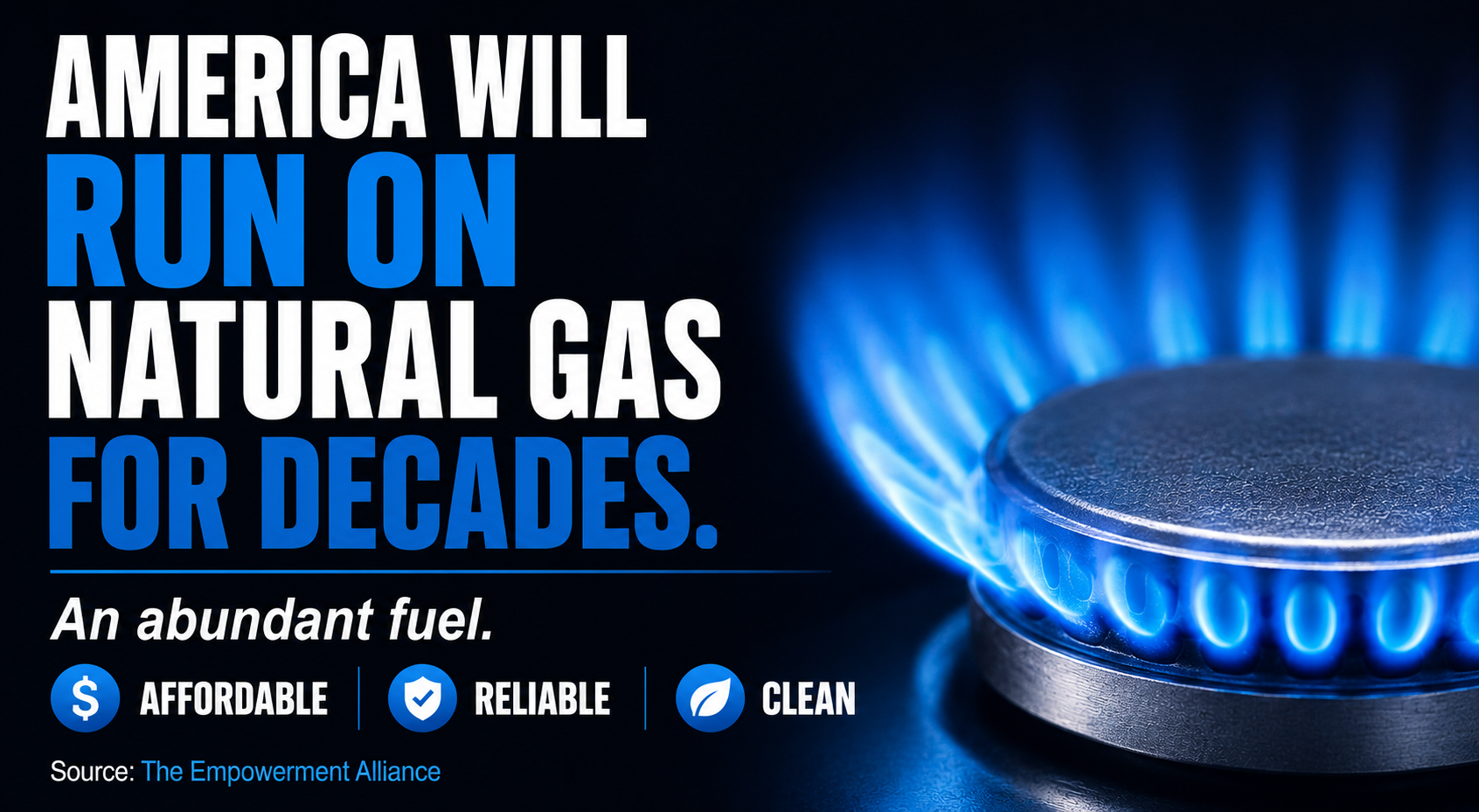
- By the end of the decade, natural gas will likely surpass oil for the first time after the gap all but disappeared in 2025.
- This seismic shift will end a chapter that began in 1950, when petroleum ended the longstanding reign of another fossil fuel: coal.
- The change comes as electric vehicle use and data center development boosts electricity demand from gas-fired power plants, further straining our grid.
“I say we probably cross that threshold within the next couple years, and by 2030, we will have a big lead on petroleum,” Toby Rice, chief executive of a top US gas producer EQT Corp., said in a recent interview with Bloomberg News.
Nonsense
- Gas and construction trade groups sued to block the law two years ago, arguing it violates the federal government’s rules around how gas appliances are regulated under the 1975 Energy Policy and Conservation Act (EPCA).
- The Second Circuit U.S. Court of Appeals ruled that “the challenged laws are not preempted under EPCA.”
- Building trade groups have strongly opposed this measure, as they have in other states.
New York’s new law bans natural gas and propane equipment in most new buildings up to seven stories tall, requiring electricity to power stoves, furnaces, water heaters and dryers.
Home builders say the state’s electric grid isn’t prepared for the added demand. They warn the mandate will increase construction costs, drive up home prices and further strain affordability. Their request is simple: delay implementation until the grid is capable of supporting it.
Fortunately, the political winds are shifting nationally. Since the Ninth Circuit’s decision in California Restaurant Association v. City of Berkeley three years ago — and subsequent legal challenges — many states and local governments have become more cautious about pursuing outright natural gas bans.
While New York is the most extreme in restricting natural gas, roughly 25 states have enacted “energy choice” laws protecting consumers’ ability to use natural gas by preventing local governments from banning gas hookups or appliances. Those states include Texas, Florida, Ohio, Tennessee, Oklahoma, Arizona, Indiana, Kentucky, Louisiana, Utah and West Virginia.
Bottom line: Consumers — not politicians — should decide how to power their homes.
A look ahead
FERC Open Meeting: On Thursday, July 16, the Federal Energy Regulatory Commission will hold an Open Meeting of the Commission.
Quote of the week
— Robert Levy, executive counsel at Exxon, upon joining the Justice Department’s newly renamed Energy and Natural Resources Division.