
Global Conflict Shows Need For Strong Domestic Energy
March 12, 2026
Need to know
-
- Check out TEA’s website for the latest in energy news and opinion.
- Afternoon TEA: An Affordable America Begins With Affordable Energy.
- TEA Takes: Congress passing ARC-ES is the natural follow-up to EPA’s rejection of the endangerment finding.
- AI is spurring a big expansion of power lines; landowners fight back.
- Trump cuts threaten the US role in global climate modeling.
- US solar installations down in 2025 after policy shift.
- California’s $2.2B solar plant is shutting down.
- The White House gets more involved in permitting talks.
- Hochul backs off New York’s aggressive climate timeline.
ARC in the states
- Testimony by Heartland Impact in West Virginia in support of Senate Bill 420.
- SB 250 in Kentucky. Create a new section to define terms … to adopt rules and policies to prioritize securing affordable, reliable and clean energy by prioritizing domestic fuel sources.
RealClear
- Affordable, Reliable Clean story stream.
- Global capital is buying U.S. LNG.
Common Sense
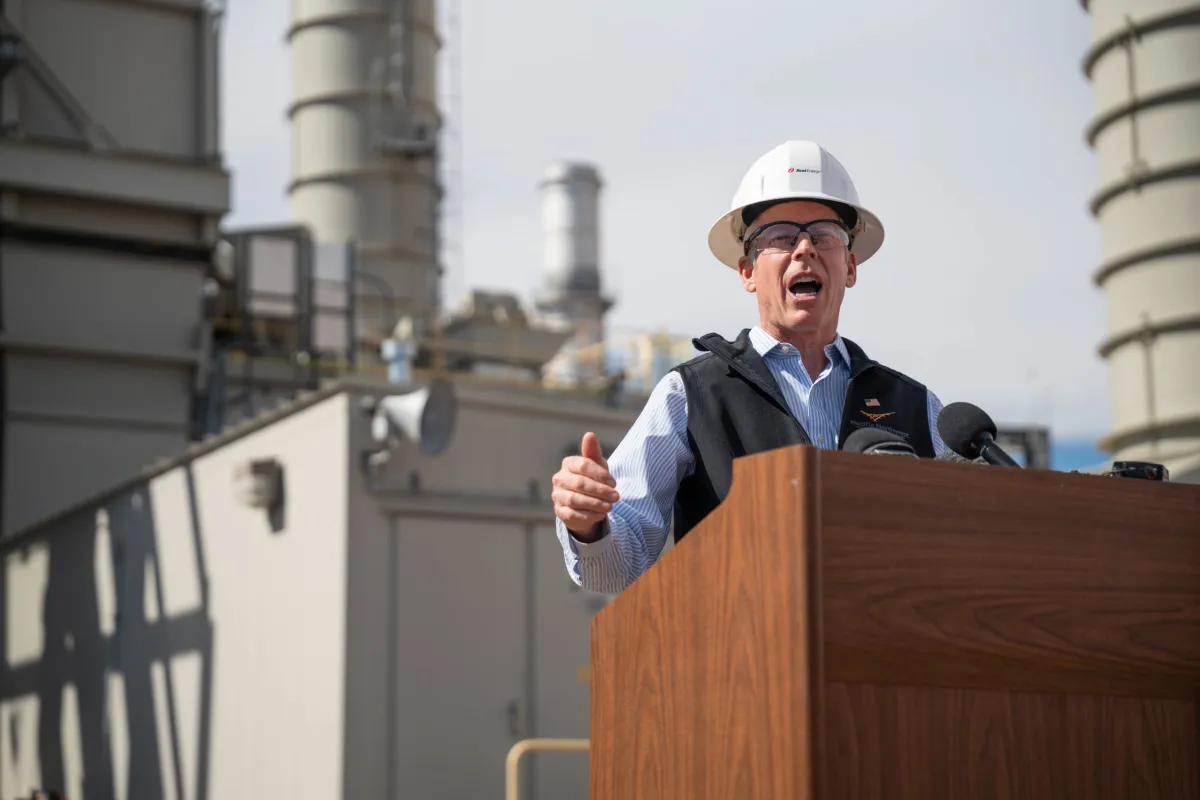
“Look, you never know exactly the time frame of this, but, in the worst case, this is a weeks thing, this is not a months thing,” Wright said.
- The conflict in the Middle East — sparked with U.S. and Israeli strikes on Iran on Feb. 28 — has roiled energy markets and driven up prices for crude, natural gas and oil products, threatening to unleash a wave of global inflation.
- Last weekend, the national average for a gallon of regular gasoline rose 14 percent, marking an almost two-year high as the Strait of Hormuz’s near closure continues to spawn economic instability.
- President Trump also assured Americans it is temporary.
We have an abundant energy supply, with enough natural gas to power the nation for 130 years at our current consumption rate. That’s reassuring, particularly during these uncertain times.
Ironically, against this backdrop, Trump announced the opening of America First Refining’s first new US oil refinery in nearly a half century in Brownsville, Texas, The $300 billion deal will break ground this spring.
Nonsense
- Over 78% of U.S. electricity generation comes from traditional energy sources and over 43% comes from natural gas alone.
- Besides being an energy source, petrochemicals derived from oil and natural gas make the manufacturing of over 6,000 everyday products and high-tech devices possible.
Dr. Matthew Wielicki, earth science professor, outlines the truth: Wind and solar aren’t replacing fossil fuels. They’re being added on top of them.
That’s not a transition. That’s energy expansion.
The world isn’t choosing between fossil fuels and renewables. It’s choosing more energy of every kind because billions of people still want electricity, transportation, heating, cooling and modern living standards.
A look ahead
Hearing On Critical Minerals: On Tuesday, March 17, the House Natural Resources Subcommittee on Oversight and Investigations will have a hearing on “Unleashing America’s Mineral Potential: The Critical Mineral Commodity Supply Chain.”
FERC Open Meeting: On Thursday, March 19, the Federal Energy Regulatory Commission will hold an Open Meeting of the Commission.