
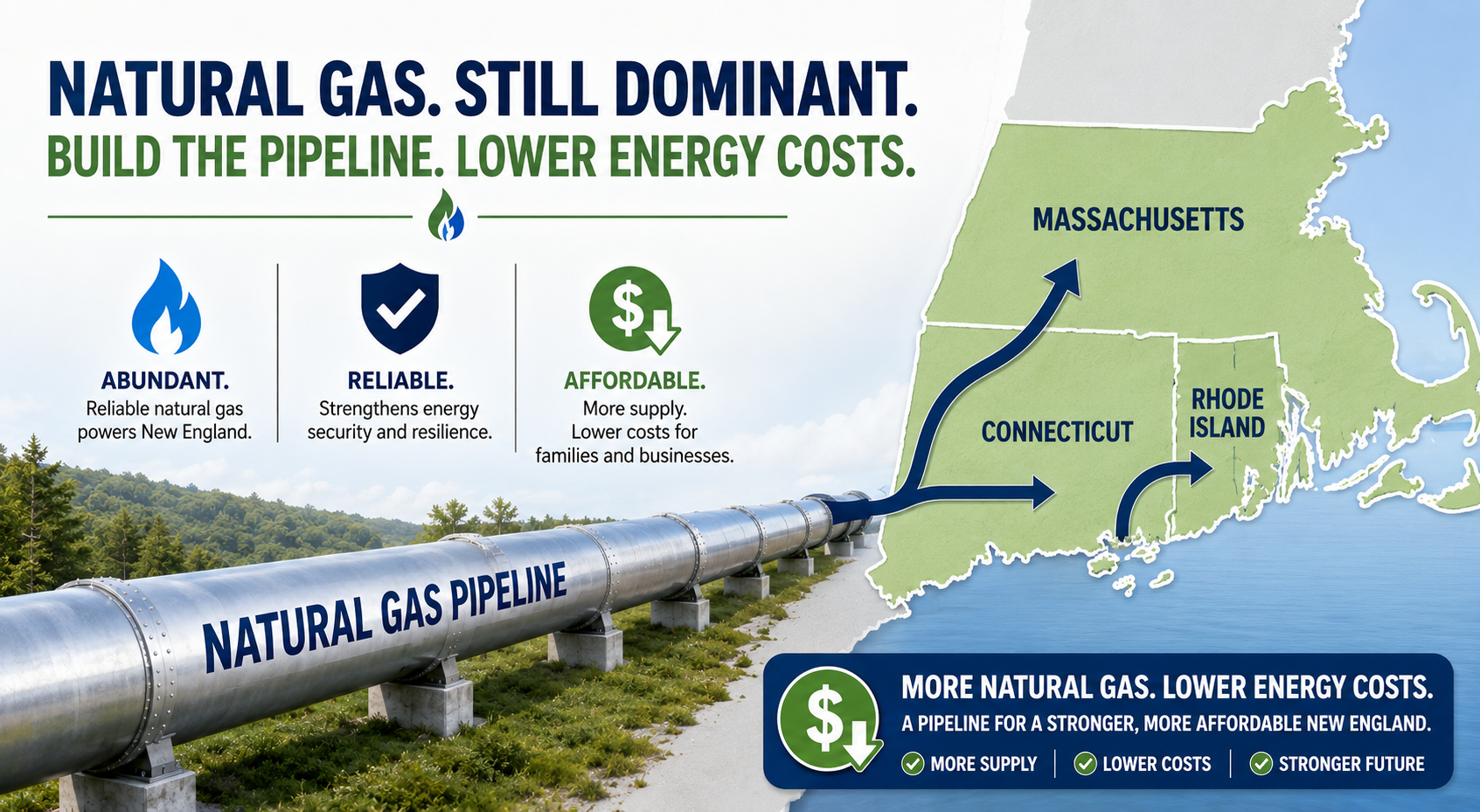
More Pipelines Would Mean Lower Energy Costs In New England
June 4, 2026
Need to know
- Check out TEA’s website for the latest in energy news and opinion.
- Afternoon TEA: Americans Need To Get Mad.
- TEA Takes: The climate scam is acknowledged. Americans were fed lies, and deserve to be compensated.
- Texas leads in new natural gas pipeline builds.
- Exxon chief warns of skyrocketing energy prices; exits NJ for Texas.
- The China surprise: Crude leverage.
- Enemies of Energy: Saving the Earth.
- Louisiana seeks to shield oil industry from climate lawsuits.
- Seven states sue Trump over offshore wind cancellation.
RealClear
- A Tale of Two Types of States: Those With Dumb Energy Laws and Those With Smart Laws.
- Opinion: Unleash Competition to Meet the Commonwealth’s Urgent Energy Needs.
Common Sense
VOTES OVER IDEOLOGY: Administration officials say they have unexpected allies in President Trump’s quest to increase the flow of natural gas into New England: its Democratic governors. A political crisis over rising energy prices is the cause.
The change puts New England at the center of a nationwide trend. Liberal states are rolling back climate measures due to growing concerns about energy affordability as data centers consume electricity and the Iran war pushes gasoline prices higher.
Why it matters: Natural gas pipelines increase supply and improve delivery efficiency, which helps lower fuel and electricity costs for homes and businesses. States with strong pipeline infrastructure also tend to face fewer price spikes during periods of high demand because affordable natural gas can move more reliably to consumers and power plants.
Consider: Two pipeline options are under consideration in the region. Enbridge, owner of the Algonquin system, has proposed a roughly 10% expansion of the line, while Williams Cos. plans to build the 125-mile Constitution Pipeline from Pennsylvania to near Albany, New York.
- How far Democrats will go in backing these projects remains unclear. But Connecticut Gov. Ned Lamont, Massachusetts Gov. Maura Healey and Rhode Island Gov. Dan McKee have all publicly signaled support for pipelines — while stopping short of endorsing specific projects.
- The growing openness to natural gas marks a major shift in a deep-blue region where fierce grassroots opposition to hydrocarbons helped kill multiple pipeline projects a decade ago.
- The change is especially notable in New England, where leaders once singularly focused on climate goals are now increasingly confronting rising energy costs.
Make no mistake though: They still abhor fossil fuels.
But sky-high bills are colliding with critical questions about the region’s future energy supply. Because they’re such hypocrites, they’ll willingly sacrifice their tried-and-true Green New Deal beliefs just to remain in power.
The biggest shift was in Massachusetts, where Gov. Healey has gone from bragging about her opposition to pipelines on the campaign trail four years ago to embracing an “all of the above” energy strategy as she gears up for a re-election bid this year.
Bottom line: By prioritizing affordable, reliable, clean thermal power, the United States can secure the electricity needed to meet growing demand, fuel economic growth and strengthen energy independence.
Nonsense
NATURAL GAS POWER: A massive 40,000-acre data center sparks uproar in Utah as Gov. Spencer Cox says it will never run solely on natural gas.
You’re wrong, sir. Dead wrong.
Why it matters: Data centers are here to stay, so communities and states must work with them to ensure they’re built responsibly and financed properly. Those debates should happen — and with consumer costs always front and center.
What’s not up for debate are these facts:
- Data centers create a looming need for more electricity and the energy sources that fuel it — and renewable energy just won’t cut it.
- Data centers will double their U.S. electric demands by 2030 — requiring enough electricity to power more than 26 million average homes.
- Demand from data centers will grow by 165% by 2030.
- To ensure energy independence and economic growth, America must prioritize building dispatchable, reliable thermal power generation.
Consider:
Renewable energy sources are inherently intermittent. Solar power depends on sunlight, which is not available at night or during cloudy days. Similarly, wind power relies on conditions that can be unpredictable and vary widely by location and time.
This intermittency poses a significant challenge to maintaining a stable and continuous electricity supply. In short, it leaves our communities prone to blackouts.
As a result, the current renewable energy infrastructure often struggles to meet the consistent energy demands of industrial, commercial and residential sectors.
Data centers make Americans’ lives better and support many of our daily activities — online shopping, streaming movies, storing photos and documents in the cloud and much more.
Bottom line: It’s clear natural gas is the best answer to help power the massive projects, regardless of where they’re being built, for decades to come.
A look ahead
Hearing On DOE Budget: On Wednesday, June 10, the House Science, Space, and Technology Committee will have a hearing on the Department of Energy’s Fiscal Year 2027 Budget Request.
Quote of the week
“We’re approaching unheard of inventory levels. I mean really, really low levels. You can debate whether that’s going to hit those really low levels in two weeks or three weeks. Once you get to that point, then you’ll see prices shoot up.”
— Exxon Senior Vice President Neil Chapman warned at an industry conference.
ILLUSTRATION: The Empowerment Alliance