States Fighting Climate Lawfare
August 6, 2026
Need to know
- Check out TEA’s website for the latest in energy news and opinion.
- TEA Takes: As LNG exports show, ARC-ES is crucial for U.S. and international energy stability for years to come.
- The grid’s climate stress test.
- Electric bills hit new highs across Ohio, data shows.
- Energy IPOs are booming thanks to AI’s insatiable thirst for power.
- Texas data center approval halt scrambles grid plans.
- Court halts Trump EPA attempt to block ‘green bank’ funds.
- Tennessee’s governor predicts the state may land a nuclear facility.
- Data center foes win big in Tuesday’s primaries.
- Senators outline future of permitting talks.
RealClear
- Opinion: The Energy Stack Must Prioritize Energy Affordability.
Common Sense
- The Trump administration sued New York, Vermont, Hawaii and Michigan over climate-related laws or litigation efforts — but lost its Michigan case.
- Several states have introduced “Climate Superfund” bills that would hold major greenhouse gas emitters financially liable.
- New York’s Climate Change Superfund Act allows the state to pursue billions from companies accused of contributing to climate-related damage.
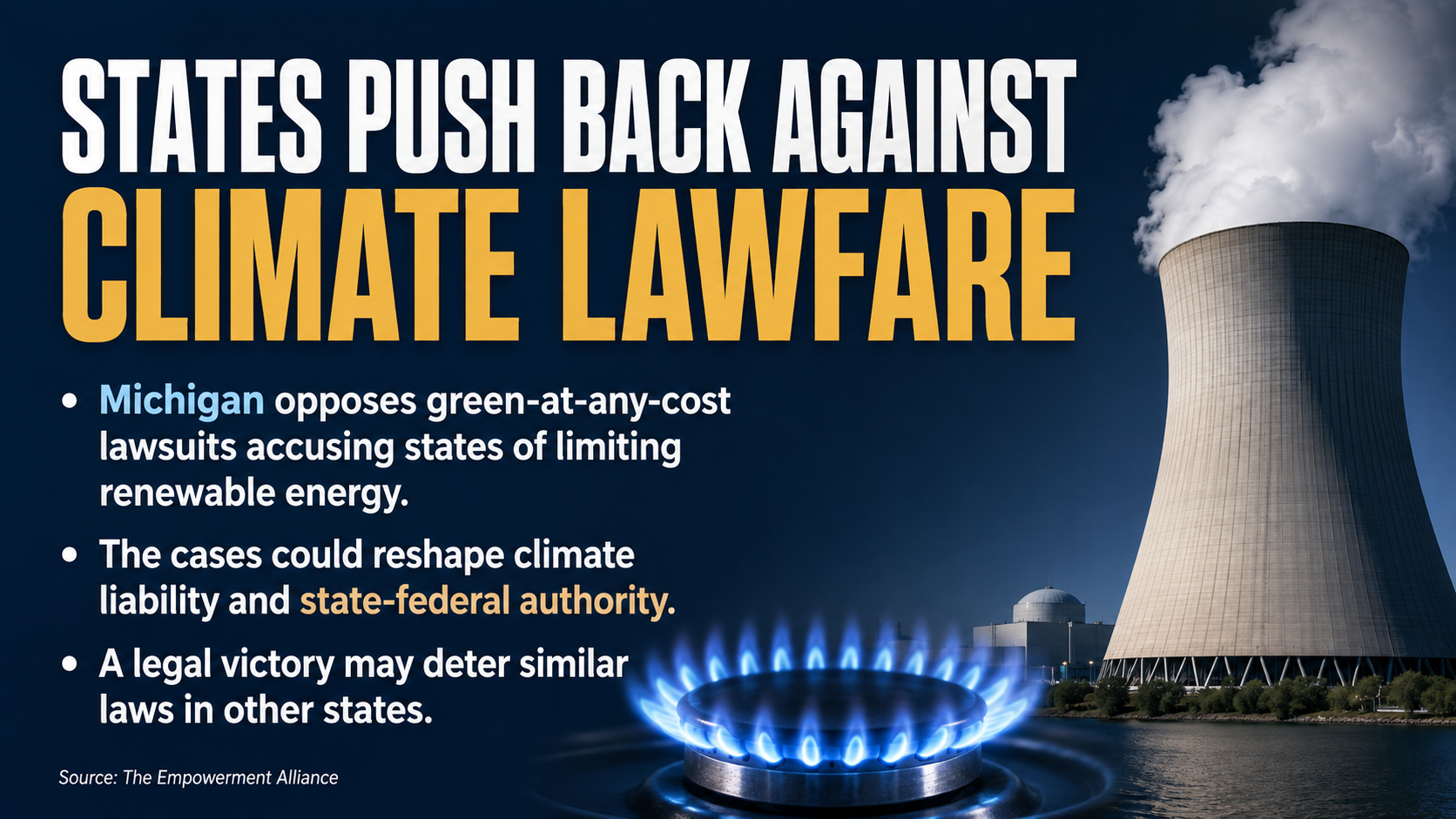
Unfortunately, climate lawfare continues, with Michigan the latest offender. Its lawsuit accuses four major energy producers and the American Petroleum Institute of acting as a “cartel” to suppress renewable energy and electric vehicles.
Climate lawfare is the strategic use of legal systems and courts by activists, local governments, and organizations to hold corporations and nations accountable for climate change or to force energy policy changes.
Once again, providing affordable, reliable hydrocarbon energy is being vilified by the green-at-any-cost crowd. The alternative — costly, weather-dependent wind and solar — has already driven up consumer costs from California to New England. This agenda must be stopped.
Bottom line: These lawsuits could reshape climate liability and the balance between state and federal authority. Success may deter similar laws; failure could embolden more states to target fossil fuel producers.
Nonsense
BLOWIN’ IN THE WIND: Dominion Energy reports that the Coastal Virginia Offshore Wind project, the nation’s largest offshore wind farm, is over 81% complete. But, not surprisingly, its estimated cost has risen to over $11 billion, with a target date of 2027.
Why it matters: The time and money wasted could have been better spent on developing traditional sources of energy such as natural gas, clean coal or nuclear energy. A state and/or federal law such as ARC Energy Security would eliminate such waste and ensure that domestic energy also strengthens our national security.
Consider:
- It’s expected that 176 turbines will be generating power off the coast of Virginia Beach by the end of next year.
- The CEO claims it helped fill demand for power in recent heat waves, but we have serious doubts about the long-term reliability of wind projects.
- Wind and solar receive billions in subsidieseach year making it an unlevel playing field against other energy sources.
TEA believes that the United States is the economic leader of the world and requires a massive energy supply to sustain growth and foster the freedom and prosperity that inspires people everywhere.
It’s worth noting that in the U.S. power grid, wind provides only about 10% of our nation’s electricity. Natural gas — the top source of U.S. electricity generation — provides four times as much at 41%.
If a wind project like this could provide Affordable, Reliable and Clean Energy Security that improves the environment while keeping us secure and independent, we welcome it to the mix. But clearly the Coastal Virginia project does not.
And, we already have energy ready and available like American natural gas and nuclear power which does. The ARC Energy Security Act can serve as model legislation for states and local governments to ensure this standard is met.
Bottom line: Offshore wind has proven again and again that it can’t meet the Affordable, Reliable and Clean energy standard. Not to mention, it’s potentially a national security risk. Investment of additional dollars in these endeavors is foolish and should be halted, until they can compete on their own merits.
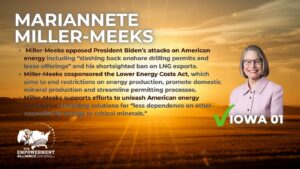
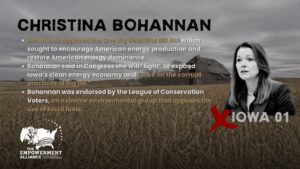
Midterm Spotlight