States Must Build Digital Futures On ARC Energy Security
March 26, 2026
Need to know
- Check out TEA’s website for the latest in energy news and opinion.
- Afternoon TEA: Pain at the pump needs a new cure.
- Trump officials rule out oil export ban.
- The first US coal plant in a decade is on shaky ground.
- Politicians who cut solar and wind subsidies saved our grid.
- Opinion: The ‘relief’ bill’ that will raise your energy costs.
- TotalEnergies ends offshore wind projects, invests in oil and gas.
- Maryland Supreme Court rejects climate lawsuits.
- NextEra to develop 9.5 GW of gas in Texas, Pensylvania.
RealClear
- Affordable, Reliable Clean story stream.
- Opinion: How a startup won big in LNG and defended American energy innovation.
Common Sense
‘GROWTH NOT SURRENDER’: Oklahoma’s digital future will be built on Affordable, Reliable, Clean Energy Security.
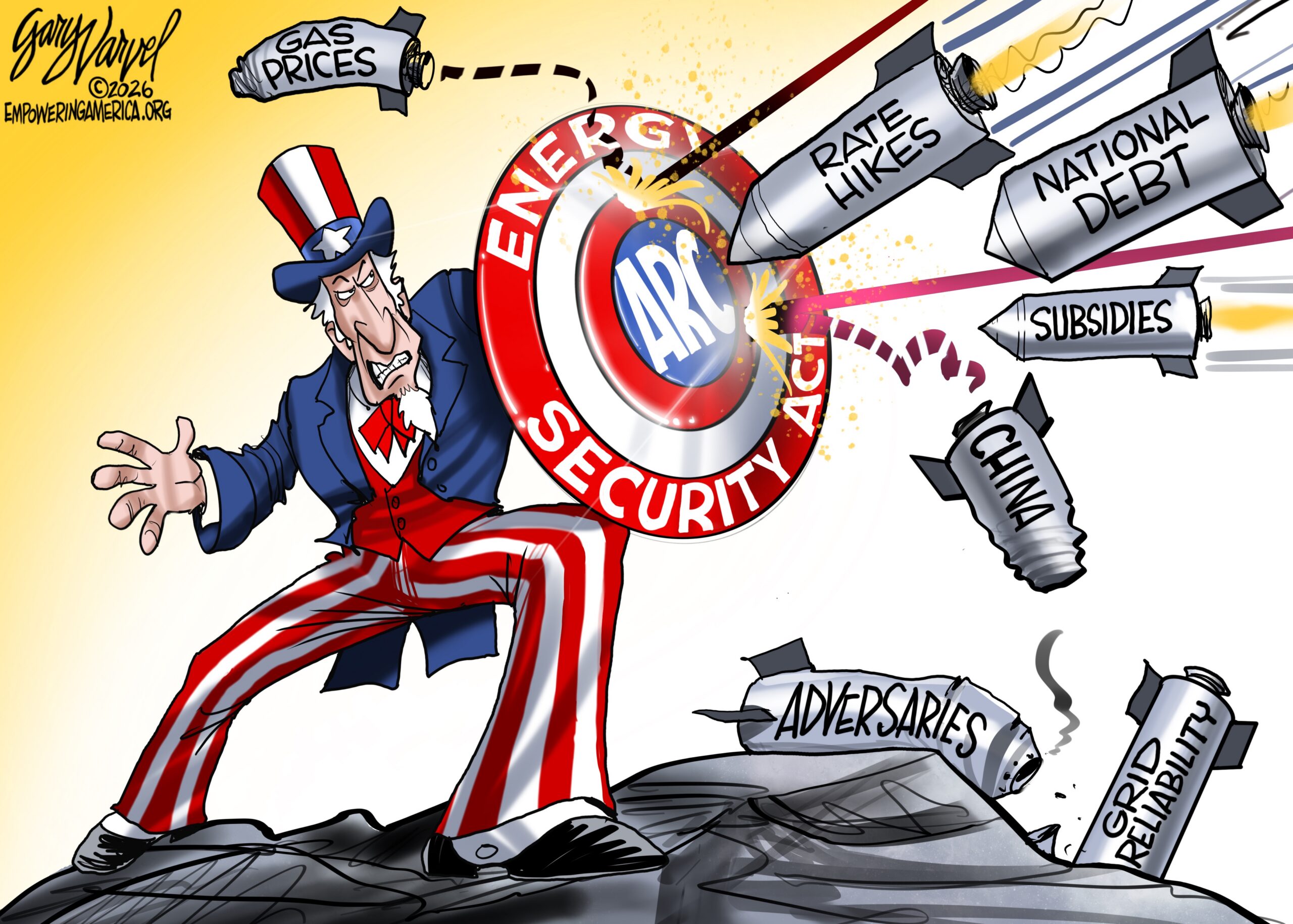
Why it matters: At the state level, ARC protects ratepayers by insisting that new demand be backed by affordable, reliable power, instead of leaving families and small businesses to absorb the cost of intermittency, unreliability and grid instability. We believe that ARC is critical as federal law, but equally important for individual states and their communities.
Consider:
- State Sen. Michael Bergstrom has proposed what should be viewed as an essential next step: a framework built around affordable, reliable, and clean energy — or “ARC.” S.B. 1300 — would direct the Oklahoma Corporation Commission to prioritize affordable, reliable, clean energy security;
- To define reliability around non-intermittent generation and meaningful performance standards; favor domestic fuel sources; prioritize infrastructure and components built in Oklahoma and the US;
- To prohibit critical resources sourced or manufactured by a foreign adversary nation.
It also calls for sufficient dispatchable clean energy to meet residential and commercial demand. The Senate version passed it 92-2.
Other states such as Louisiana and Ohio have taken steps to protect its consumers. The Louisiana new law signed last June incorporates elements of the ALEC model of Affordable, Reliable, and Clean Energy Security Act. That model followed actions taken in Ohio and Tennessee in 2023 that redefined natural gas as a clean energy source.
As author Cameron Sholty points out, a state with reliable and reasonably priced electricity is attractive not just to data centers, but also to manufacturers, processors, logistics firms and every other major employer that depends on stable energy.
We applaud Oklahoma for taking such bold action. That is why S.B. 1300 matters.
It starts from the right premise: Energy policy should serve residents of the Sooner State first.
Natural gas currently provides roughly half of Oklahoma’s electricity and remains one of the state’s most dependable large-scale power sources.
Growth matters. Investment matters.
Bottom line: Neither must come at the expense of affordability, reliability, or energy security for the people who live and work there.
Nonsense
RELIABLE DOMESTIC ENERGY: The headline says energy fallout from the Iran war signals a global wake-up call for renewable energy. This Associated Press story is an example of hyperbole and scare tactics.
Why it matters: False premise: The war in Iran is exposing the world’s reliance on fragile fossil fuel routes, lending urgency to calls for hastening the shift to renewable energy.
This much is true: Fighting has all but halted oil exports through the Strait of Hormuz, the narrow waterway that carries about a fifth of the world’s oil and liquefied natural gas, or LNG. The disruption has jolted energy markets, pushing up prices and straining import-dependent economies.
Consider:
The truth is it won’t last. The supply route is a short-term issue. The demand will always be there for reliable American energy.
Energy Secretary Chris Wright told oil and gas executives this week that surging crude prices amid the war in Iran should encourage their companies to ramp up production, even as he continued to insist the disruption would be “short-term.”
- Clean energy sources are a noble goal, but not at the expense of affordable and reliable energy.
- Renewable energy sources like wind and solar have been propped up by government subsidies, making them costly and unreliable. Traditional energy sources like natural gas, nuclear and coal still provide most of the world’s energy.
- Wind and solar energy production contributes to emissions, and they also come with their own environmental issues.
The media is always quick to remind us that China leads the world in renewables. Yet it pales in comparison to the impact of hydrocarbons on daily life across the planet. They remain the most affordable and reliable energy sources.
American LNG has been booming and — once this crisis is resolved — countries again will line up as willing buyers.
We find it richly ironic that the very people screaming about affordable energy these days are also part of the green-at-any-cost energy crowd.
Bottom line: After this conflict is over, gasoline prices will fall, economies will improve and the world will continue to rely on hydrocarbons for affordable and reliable energy for decades.
A look ahead
Nothing on the calendar for next week.
Quote of the week
“Markets do what markets do. Prices went up to send signals to everyone that can produce more: ‘Please, produce more.’”