
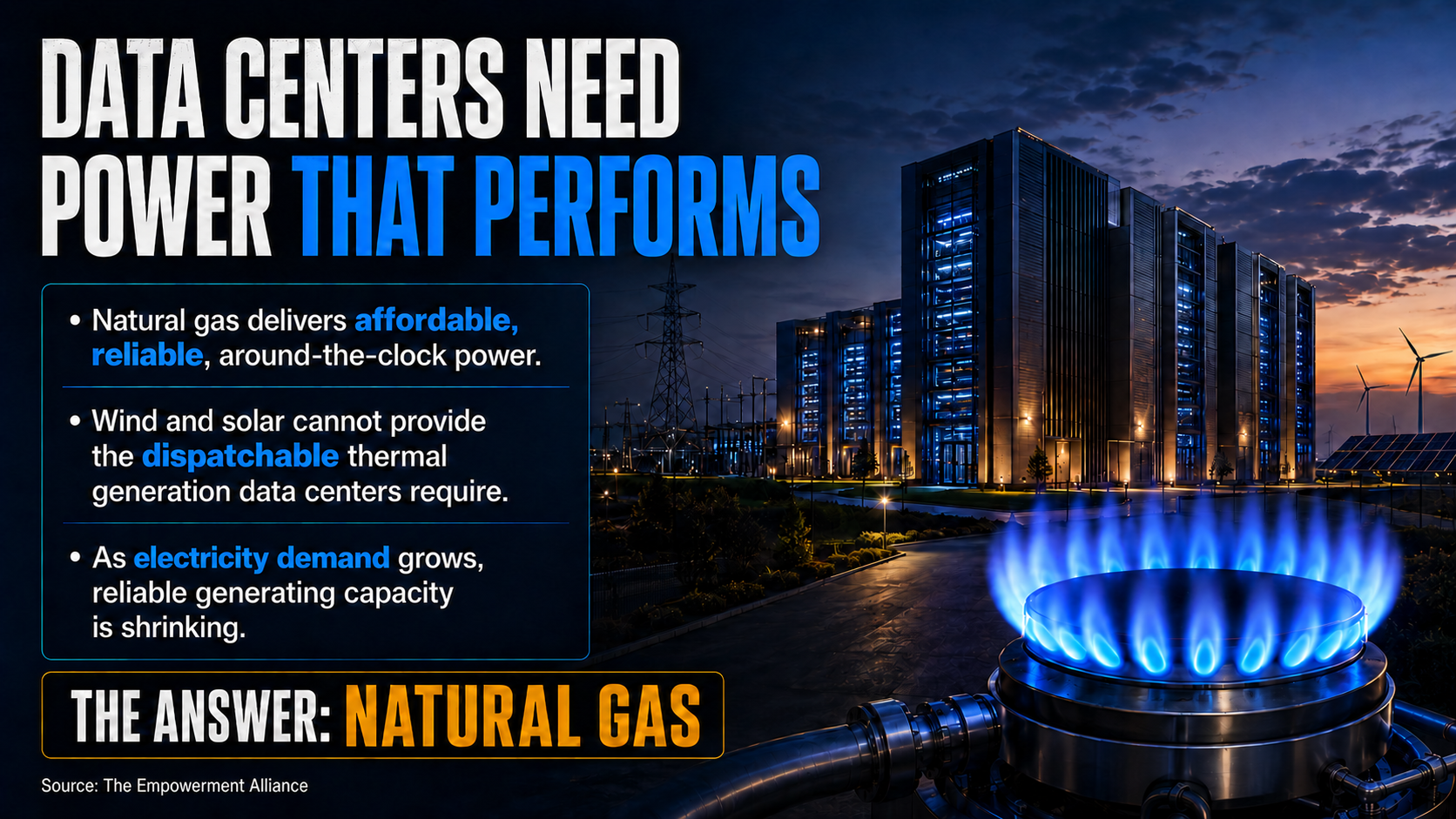
Data Center Demand Requires Dispatchable Energy
August 27, 2026
Need to know
- Check out TEA’s website for the latest in energy news and opinion.
- Afternoon TEA: Knowledge About Power is Power.
- TEA Takes: When media on the left and right agree that data center attacks are unfair, maybe we should listen.
- PJM auction signals possible electric shortage for peak times.
- Red states curb nuisance laws in response to climate lawsuits.
- Appeals court tosses case challenging permits for New York pipeline.
- TotalEnergies backs two major oil pipelines to bypass Hormuz.
- Dems sharpen attack on post-midterm target: Trump’s mineral deals.
- Power plant endangerment repeal enters White Hous review.
- U.S. close to striking massive deal for Venezuelan oil fields.
RealClear
- Opinion: Trump Puts The Brakes On The Foreign Solar Scam.
Common Sense
PIPELINE DEVELOPMENT VITAL: The New York Times has reported that Canada-U.S. trade negotiations allegedly fell apart after Prime Minister Mark Carney told President Donald Trump that the details of the deal being offered weren’t good enough to revive the Keystone XL pipeline.
The relationship has gotten a bit frosty to say the least, and that’s very unfortunate since this is a project that the neighboring nations could build upon.
Why it matters: Both need energy and want to avoid dependence on Middle Eastern oil and gas. Canada already supplies America with crude oil, natural gas and hydropower, while the U.S. exports crude oil, natural gas, refined fuels, natural-gas liquids and electricity to Canada, particularly to central and eastern provinces.
Earlier, Carney had hinted that the plan was a possibility. But tariffs appear to be a primary sticking point, news reports indicate.
At TEA, we have long advocated for more oil and natural gas pipelines as part of our Common Sense Energy Agenda.
It’s designed largely around private property and existing pipeline corridors, while avoiding tribal reservations and the political fervor associated with the location. That should reduce — though not eliminate — tedious permitting and prolonged litigation risks.
Consider:
- The proposal would in essence divide it into separate projects that can be permitted, financed and constructed individually.
- Rather than one integrated pipeline project, this is three connected pipeline segments developed in stages.
- Initial capacity of about 550,000 barrels per day, roughly two-thirds as much as the original.
It would achieve Keystone XL’s goal — moving more Canadian heavy crude to Gulf Coast refineries — through a smaller, three-part system with a potentially easier-to-permit route.
Bottom line: The new plan is a smaller, modular successor to Keystone XL — not a direct revival of the original pipeline. Yet it would deliver the desired result of bringing crude oil from Canada to the U.S., provided the two leaders can come to a mutually beneficial agreement.
Nonsense
THE FUTURE ISN’T IN RENEWABLES: The Columbus Dispatch published an article: Data centers pursue alternative energy sources, but is that a solution? The piece is a bit one-sided focusing on why renewables should be the go-to for these massive, state-of-the-art facilities.
We offer a different opinion.
The answer is natural gas, not wind and solar, to provide affordable AND reliable energy sources to this emerging industry. Renewable energy simply can’t provide the required dispatchable thermal electricity generation.
Why it matters: While small nuclear reactors are not fully developed for data centers, individual natural gas plants are powering at least two of Ohio’s more than 230 data centers.
The shift to natural gas is bolstered by a year-old state law that has sensibly streamlined the approval process, encouraging data centers to use “behind the meter” power, independent of the conventional power grid.
Data centers are under fire for a variety of reasons: noise, water and electricity consumption and generally pushing their way into rural Ohio and reshaping its landscape. Funny how those same concerns were raised against solar panels on farmlands, but somehow that was deemed just fine by the same media outlet.
Consider:
- Data centers are important for jobs, tax revenue and growth, the Taxpayers Protection Alliance says.
- Artificial intelligence requires enormous amounts of electricity.
- While the nation’s electricity needs are growing, our capacity to produce reliable, dispatchable electricity is diminishing due to increased dependence on renewable energy sources, such as solar and wind power.
- Numerous communities throughout the U.S. have lost out on data centers — and the tax revenue and jobs that come along with them — due to not being able to supply the centers with ample reliable electricity.
That’s where natural gas really comes into play.
If you recall, it’s been the green-at-any-cost push to replace traditional energy sources with so-called green resources like wind and solar to produce our electricity has created a less reliable electrical grid prone to blackouts.
The North American Electric Reliability Corporation (NERC) has issued warnings that overreliance on renewables is putting many areas of our nation at risk for grid outages. Companies investing billions can’t afford to worry about a cloudy day or one where the wind isn’t blowing.
Bottom line: The future of AI technology has arrived and if we want to take advantage of its vast opportunities, we need Affordable, Reliable and Clean American energy like natural gas to power it.
Midterm spotlight
- Michigan’s 10th Congressional district: Congressional Races Will Impact Energy Affordability, Reliability.


A look ahead
Nothing on the calendar for next week. Congress remains on summer break.
Quote of the week
“Iran still retains the ability to respond by disrupting shipping, which continues to keep a residual premium in the oil price.”
— Tim Waterer, chief market analyst at KCM